


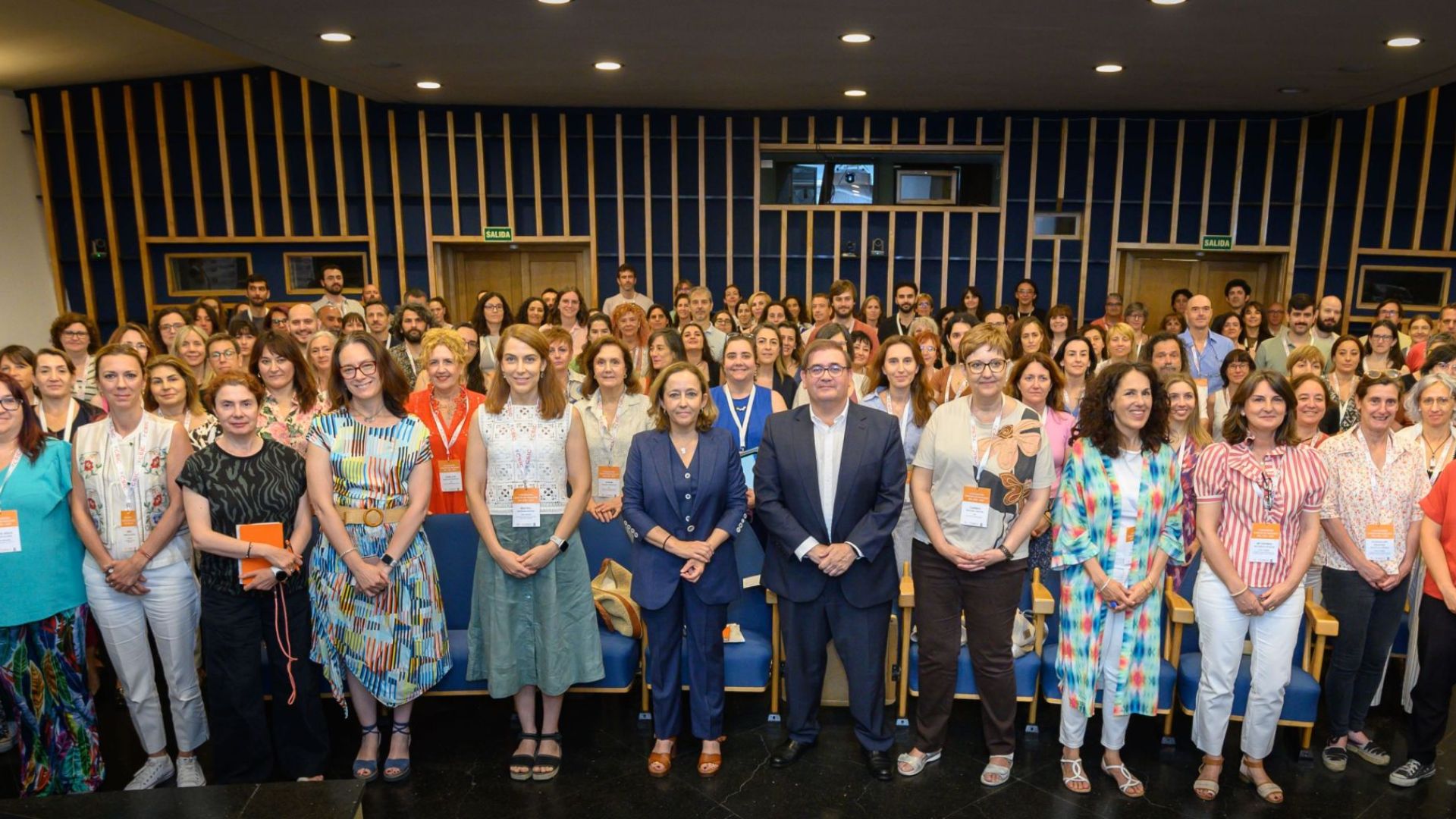
The 5th Meeting of Equality Committees of the CSIC was held in the Instituto de Ciencias de la Construcción Eduardo Torroja (IETCC-CSIC) in Madrid, with over 100 attendees in person and another 30 online—an impressive level of participation considering that there are about a hundred CSIC centres with Equality Committees.
The session was opened by Eloísa del Pino, President of the CSIC, who highlighted the need for zero tolerance of CSIC towards any inappropriate behaviour.
The next speaker was the President of the CSIC’s Delegated Equality Committee (CDI), Beatriz Esteban Añover who announced the release of new resources to combat harassment and promote inclusion such as a decalogue against sexual and gender-based harassment for CSIC workers, available in both Spanish and English, three guides designed to supplement the existing harassment protocol, also for CSIC workers, aimed at centre directors, victims, and witnesses and different protocols for the inclusion of people with disabilities.
The final presentation was delivered by María Carmen Artuñedo, Commissioner for a Safe Work Environment (COMSE).
The event also included a discussion of the criteria of the CSIC Equality Awards that aim to be sensible to the different realities of the centres. It was followed by the presentation of the winner of last year, the Institute of Chemical Technology (ITQ-CSIC), and the centre awarded a special mention, the Institute of Marine Sciences (ICM). The equality networks of Madrid and Aragón, which bring together efforts from various centres, were also introduced.
In the afternoon, four parallel roundtables were held, covering: harassment and the application of the protocol; recognition of the work of Equality Committees and professional challenges at CSIC; the integration of the gender dimension in research; and intersectionality.
“There is strong motivation and conviction among the members of the Equality Committees to drive change. However, we need structured training, so the work doesn’t fall solely on untrained volunteers, and the effort must be properly acknowledged. If equality is not placed as a strategic priority—with everything that entails—it becomes very difficult to sustain the work of these committees over time. This affects the continuity of actions, long-term planning, and the development of structured initiatives.”
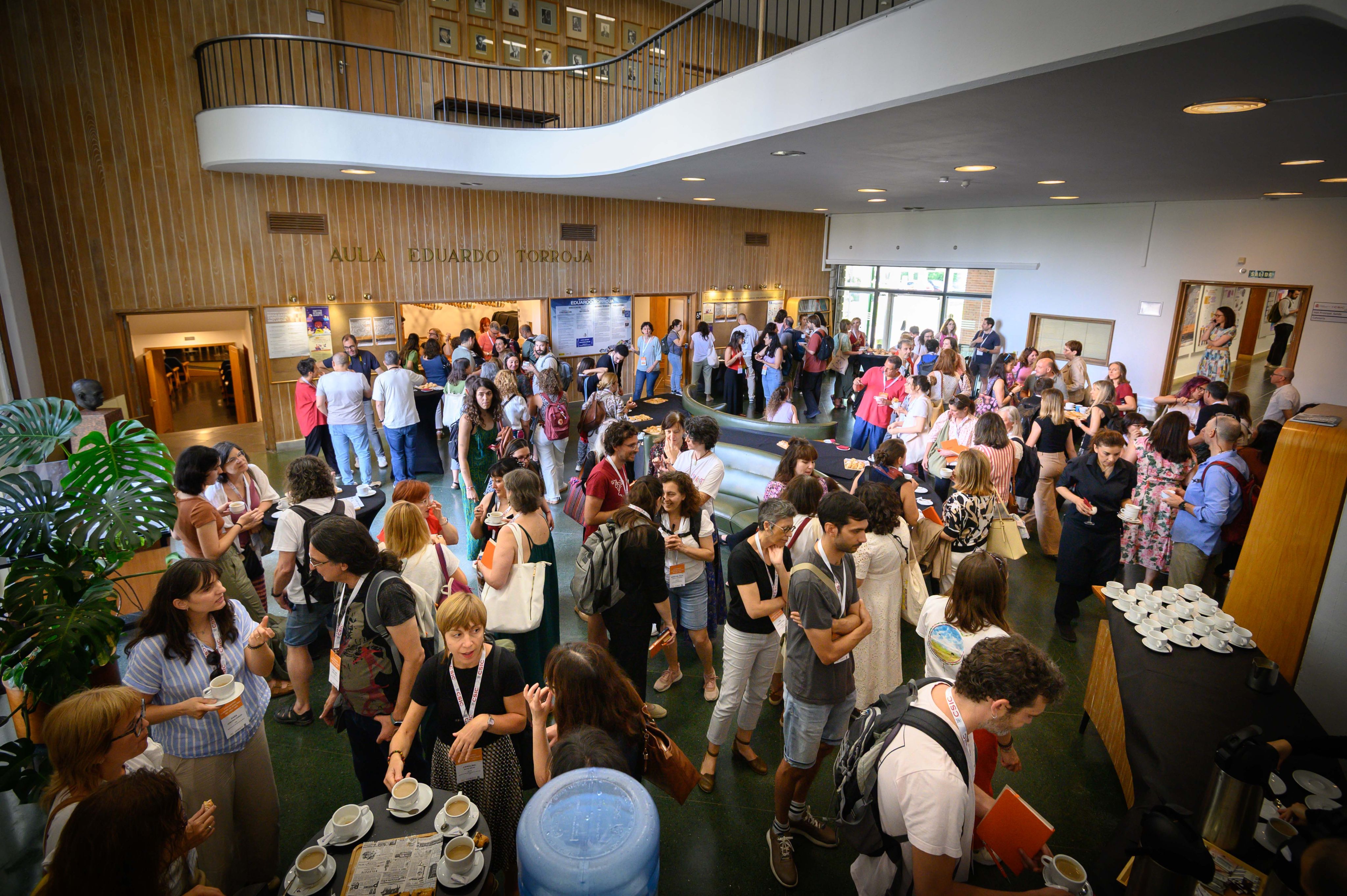 Discussion break during the 5th CSIC Equality Committees Meeting | CSIC
