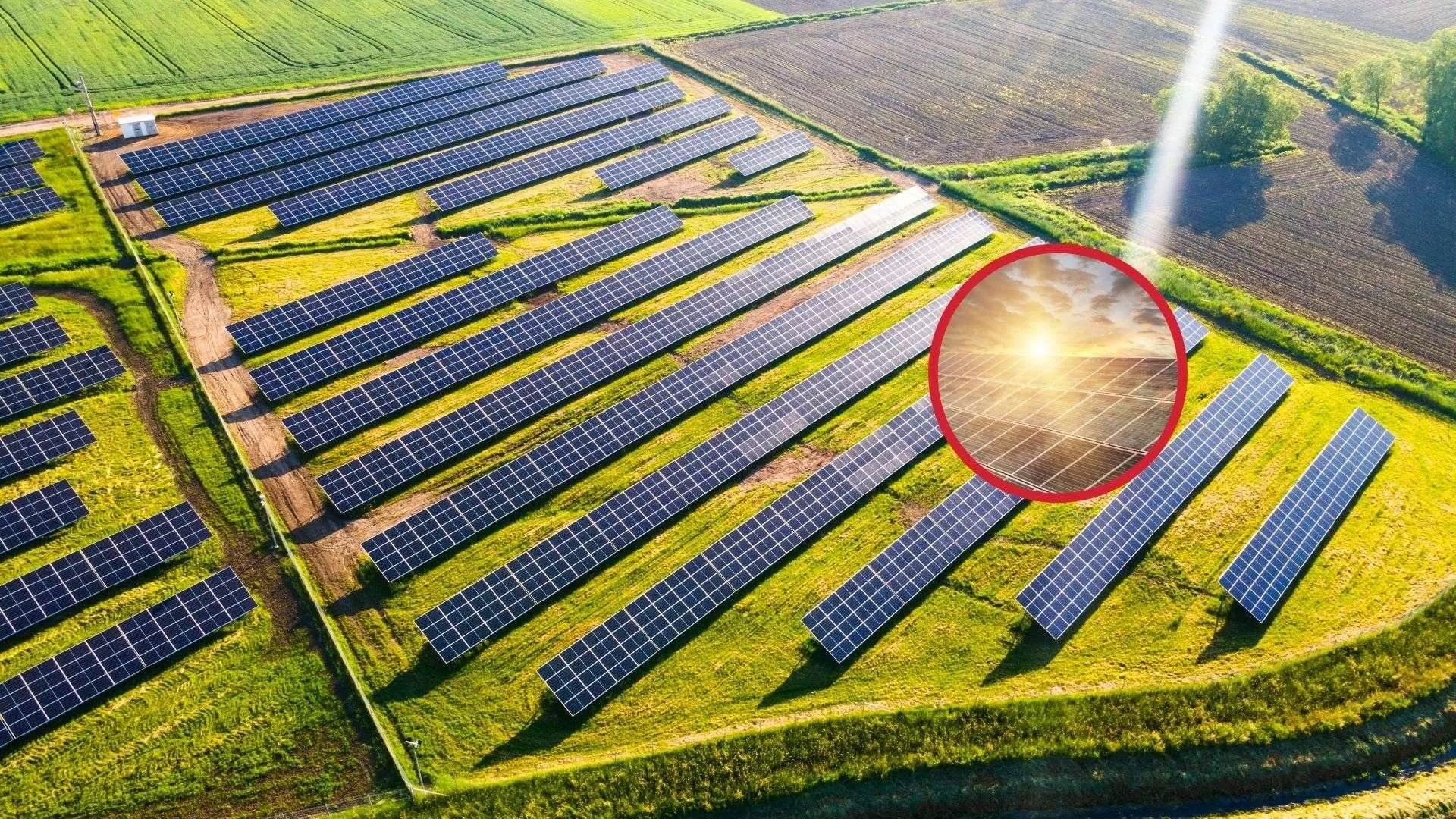
In the article, published by the end of last December, Campoy talks about the viability, conditions and future of agrivoltaics, the combionation of solar panels and agriculture.
He starts by discussing the cohabitation of these two needs: food and energy. He says that according to official sources, Spain’s agricultural area—including arable land, meadows, pastures, and other surfaces—covers about 23 million hectares (17 million under cultivation). In addition, it is estimated that another 50,000 hectares are occupied by large photovoltaic installations. Campoy mentions the problem of increasing the amount of artificial land, which could pose an environmental problem. Likewise, replacing crops with solar panels may lead to short-term social problems. He states that agrivoltaics can help ensure that both needs are met without direct competition, while always respecting that food production is a primary necessity and therefore should take priority over secondary needs such as access to electrical energy.
Campoy finishes the article discussing the possible future of agrivoltaics, which will involve new technologies such as photovoltaics based on colorants or organic semiconductors. These will permit to manufacture flexible, lightweight, and semi-transparent cells. The properties of lightness, flexibility, and semi-transparency of these technologies make them particularly attractive for integration into flexible greenhouses and as substitutes for shade cloths and hail-protection nets in fruit crops. They are also being proposed as floating covers that minimize water losses due to evaporation in reservoirs and water storage ponds. Although they are still under study, as Campoy recognises, there are already several scientific publications showing that plants can grow just as well under this type of “filter,” or even better, as demonstrated by a study on lettuce and tomatoes carried out by several U.S. universities. Reaching the point at which plant growth improves under photovoltaics while they also generate electricity would be the ultimate ideal for the coexistence of agriculture and photovoltaics.
Read the article here: Cómo frenar la competición entre agricultura y generación eléctrica instalando agrivoltaica
This article appeared in the Fundación Muy Interesante website thanks to a collaboration between CSIC and Muy Intersante.
About Mariano Campoy
Mariano Campoy-Quiles leads a 12-15 people group at the Institute of Materials Science of Barcelona (ICMAB) that has built substantial research efforts in two application areas, solar photovoltaic (light to electric) and thermoelectric (heat to electric) energy conversion. His team uses advanced spectroscopic tools and innovative processing schemes in order to understand and develop technologies based on organic semiconductors. Campoy-Quiles is a physicist from the University of Santiago de Compostela (2000), and has been awarded a PhD in experimental physics from Imperial College London, UK (2005), a Japan Society for Promotion of Science postdoctoral fellowship (2007), a Ramon y Cajal research fellowship (2009), a permanent position as tenured scientist of CSIC (2012), the Most Outstanding Young Researcher in Experimental Physics Award (from the Spanish Royal Society of Physics and Fundación BBVA) (2012), an individual European Research Council Consolidator grant (2014), promotion to research scientist of CSIC (2017), two ERC PoC grants (2020 and 2022) and Margarita Salas Medal (best mentor award) in 2024.
Mariano and his team have advanced a disruptive technology for the high throughput screening of solar cell and thermoelectric materials that combines gradients in the parameters of interest with colocal hyperspectral imaging, which results in more than 50 times faster evaluation of materials, saving up to 90% of the raw chemicals. They are using this technology to develop a-la-carte photovoltaics, i.e. solar cells that are specifically designed to maximize the performance for given applications, such as indoor PV to power IoT devices, semitransparent photovoltaics for agrovoltaics, or high efficiency multijunction (rainbow) solar cells.
His research has been internationally recognised through more than 45 invited presentations at international conferences, and the over 11200/14200 citations (Scopus/Google Scholar, h-index of 48/55) that his 157 papers have already received. He is also co-inventor in eight patents (four licensed), and has recently co-founded the spin-off company Molecular Gate S.L.. From 2019 to 2022 he was the Coordinator of the Materials for Energy and Environment Subarea of the Agencia Estatal de Investigación. He is in the top 2% of scientific researchers worldwide according to the Stanford ranking. He was promoted to Research Professor in April 2022.