

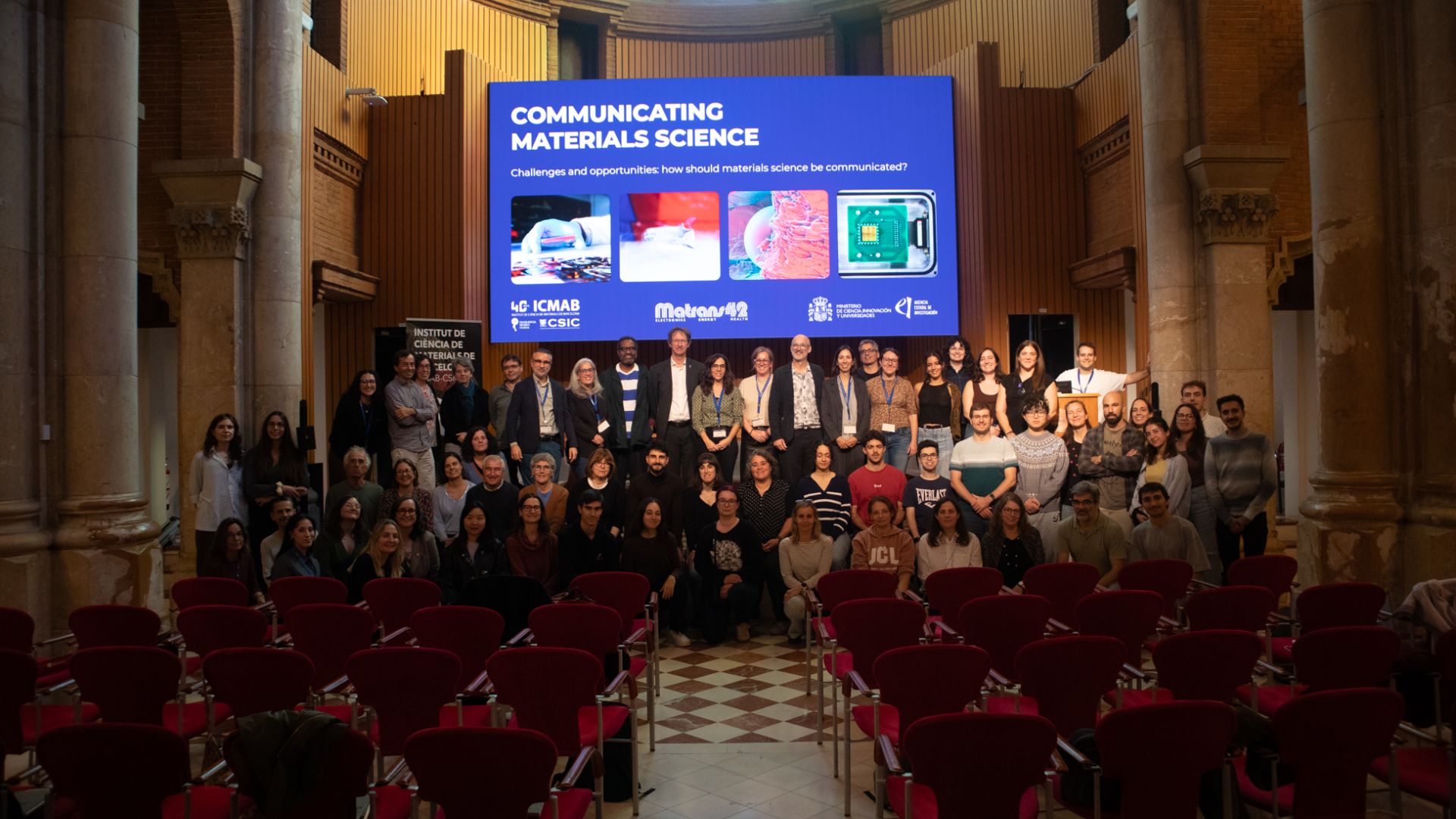
On Tuesday, November 10, the first ICMAB communication workshop, Communicating Materials Science, took place at the beautiful Casa de la Convalescència in Barcelona. Over 70 scientists, journalists and communicators gathered to listen to the experiences of professionals at the forefront of their respective fields.
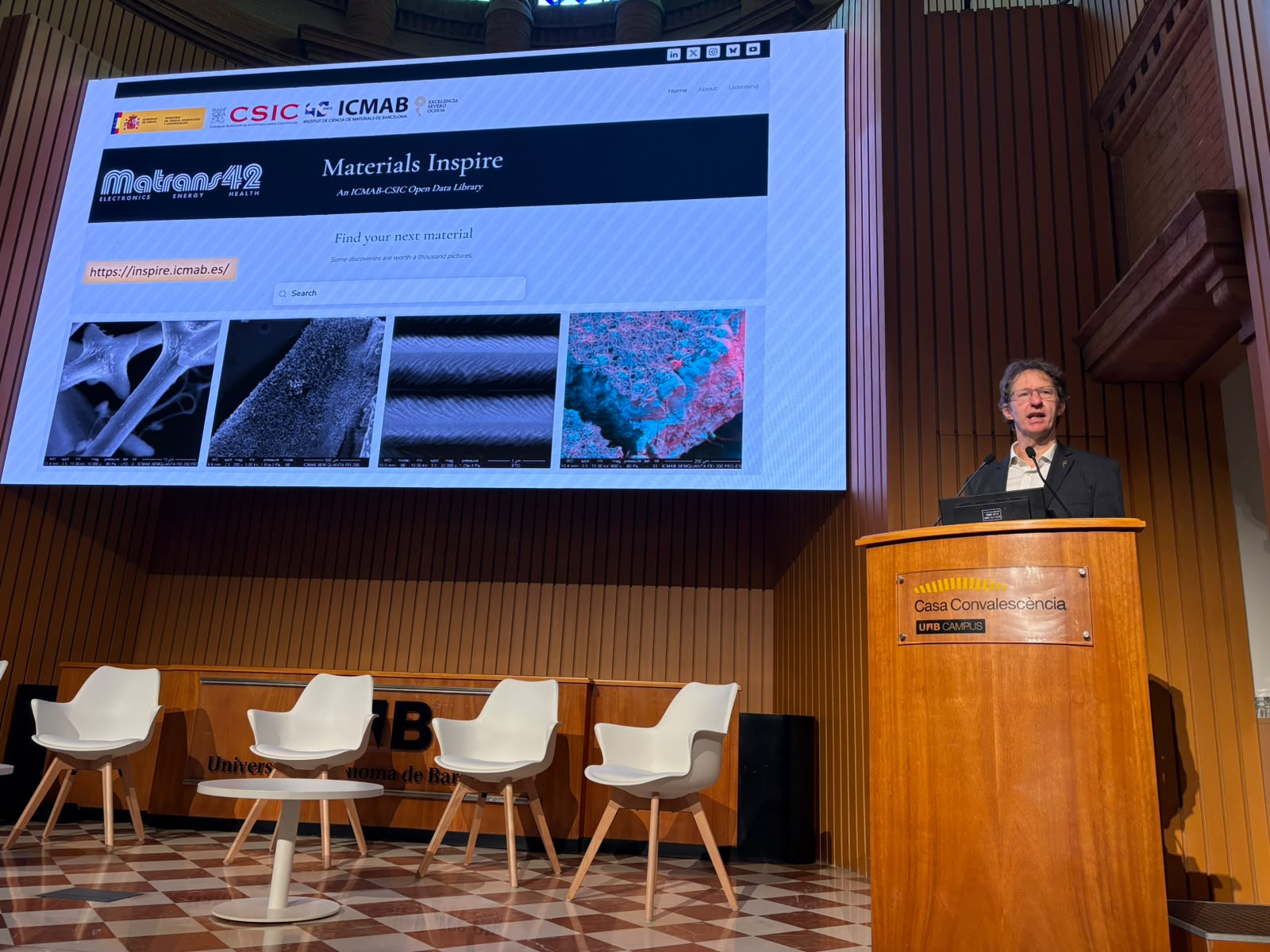
ICMAB director David Amabilino welcoming participants to the workshop and presenting the new Materials Inspire platform
The speakers were divided into two sessions. The morning session was joined by Mark Miodownik, Professor of Materials and Society in the University College London; Núria Coll, director of 7Ciències.cat and 2026 Journalist in Residence at ICMAB; Montserrat Capellas, Communication and Editorial Content Manager at the European Synchrotron Radiation Facility; Michele Catanzaro, journalist and lecturer at the Universitat Autònoma de Barcelona; and Julia Parker, Science Group Leader at Diamond Light Source.
The afternoon session, which focused more specifically on trust in science, counted with Laura Francés, science journalist at La Vanguardia, and Agustí Nieto, Professor of History of Science at the Universitat Autònoma de Barcelona. Marc Masip, physicist and science communicator from the portal Verificat.cat, was unfortunately unable to attend.
The challenges of communicating materials science
In the morning session, conducted in English and chaired by Anna May, ICMAB's Head of Communication, speakers shared different success stores and tips on how to better engage with different publics. The need to take into account publics’ voices, opinions, interests and knowledge in order to communicate science successfully was a common thread throughout all the talks.
Mark Miodownik brought us many examples of his hands-on approach to communication. He is the director of the Institute of Making, a living lab in which people interact with materials and which attracts a large number of visitors. Experimenting and encouraging public debate on scientific topics are some of the ways he suggests creating shared spaces for science involving different actors. He encouraged us to keep in mind the difference between research questions and questions that are relevant to society when planning communication activities.
In his talk at ICMAB the day before, we could see how he connects his societal concerns with his materials research. For more than twenty years, he has championed materials science research that links to the arts and humanities, medicine, and society. He has not given up on books or on capturing people’s attention over longer periods.
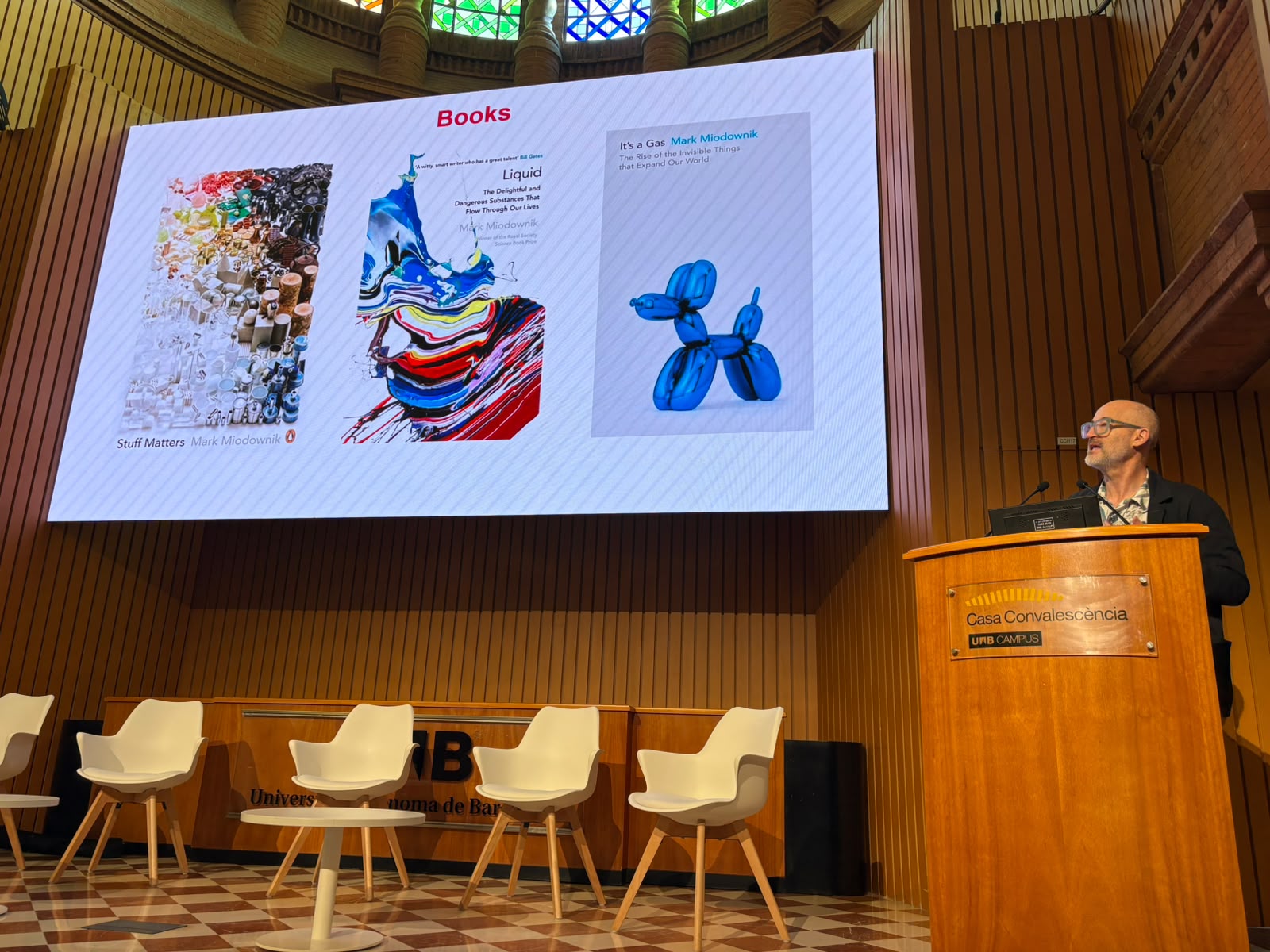
Mark Miodownik presenting his books during his talk
Núria Coll shared the lessons she had learned throughout her professional journey, from being a biology researcher to becoming a science communicator. She stressed that scientists may have different audiences, ranging from colleagues and policymakers to industry and the media. To communicate with all of them, an effort must be made to understand these audiences when thinking about the message to be conveyed.
Her two-month stay at ICMAB familiarised her with material science research and the characteristics of its community, allowing her to share some very practical tools with researchers for giving presentations and talking to journalists.
Montserrat Capellas provided an overview of the lessons learned throughout her long career working at large-scale research facilities. In addition to publics, she also focused on communication formats. Communication has changed considerably over the last couple of decades. However, in science, the challenge of communicating complex concepts is not always compatible with the fast-paced flow of information we are now accustomed to. Nevertheless, social media and the visual world we live in can also be used to our advantage in science communication.
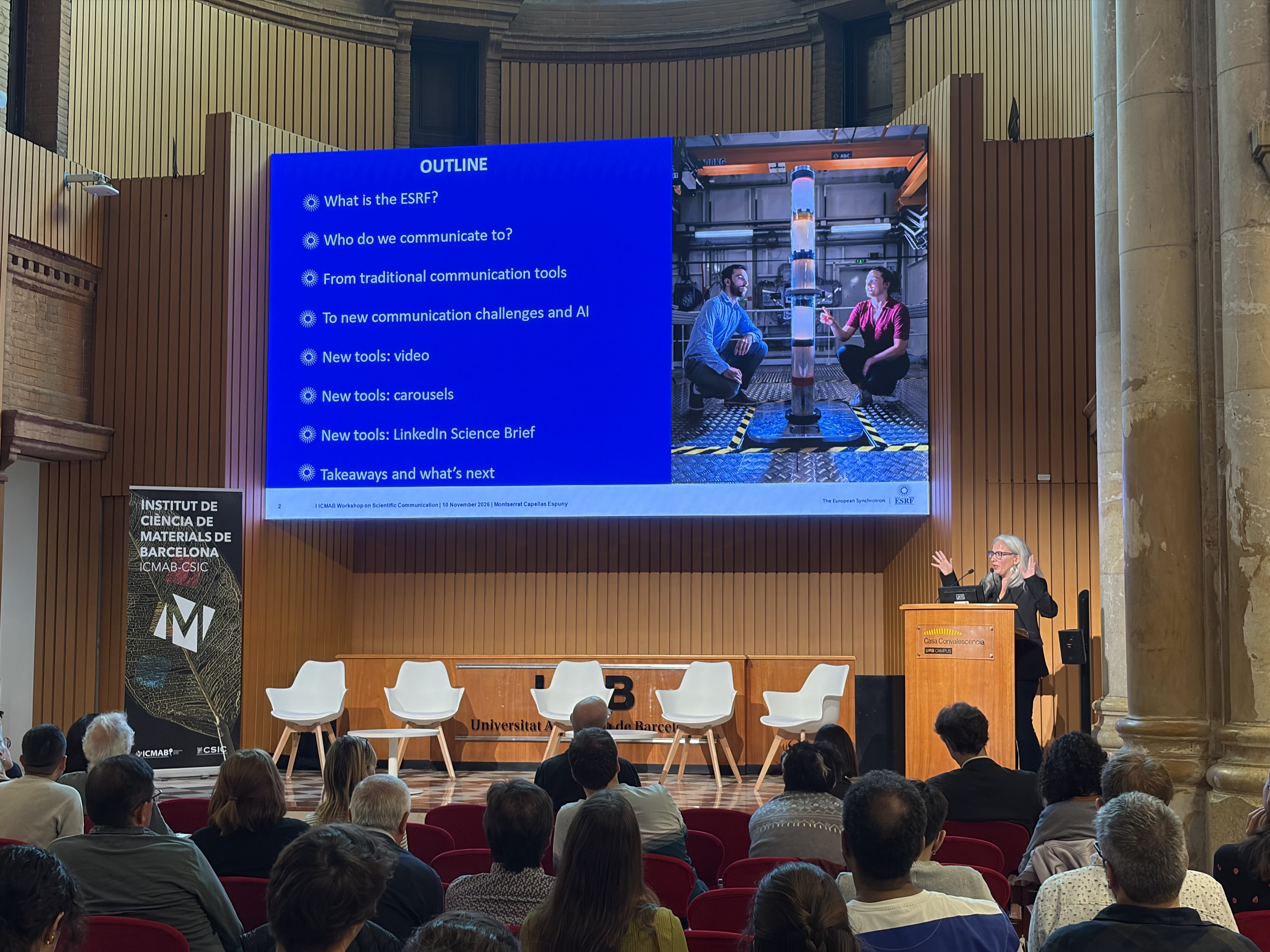
Montserrat Capellas during her talk, coverying everything from scientific content to new formats
Michele Catanzaro was next, focusing on the much-needed good relationship between journalists and researchers. He shared different success stories of this multidisciplinary partnership, ranging from media articles that increase the readership of scientific papers (as happened during COVID-19) to cases in which journalists end up correcting research itself. He also offered some advice on the dangers of hype for both sides, as well as some ideas for scientists on how to build good relationships with journalists.
Finally, Julia Parker reflected on her experience coordinating a citizen science project, using it to illustrate the different stages of research in which citizen science can be useful. Julia leads a group of eight instruments that use electrons and X-rays to image samples under different experimental conditions at the UK’s Diamond Light Source. She wanted to give students the experience of participating in the scientific research conducted there. In Project M, which involved 110 schools, students helped to answer a real scientific question investigated at the Synchrotron. From sample synthesis to methodology design, she explained the potential of citizen science as a powerful scientific communication project.
In the round table discussion following the talks, participants discussed the priorities of science communication at science centres. There are many possible formats, but these should be chosen after deciding on the content. A topic or approach needs to be selected, developed and turned into an area of expertise. Linking it to the centre’s mission would also be very valuable.
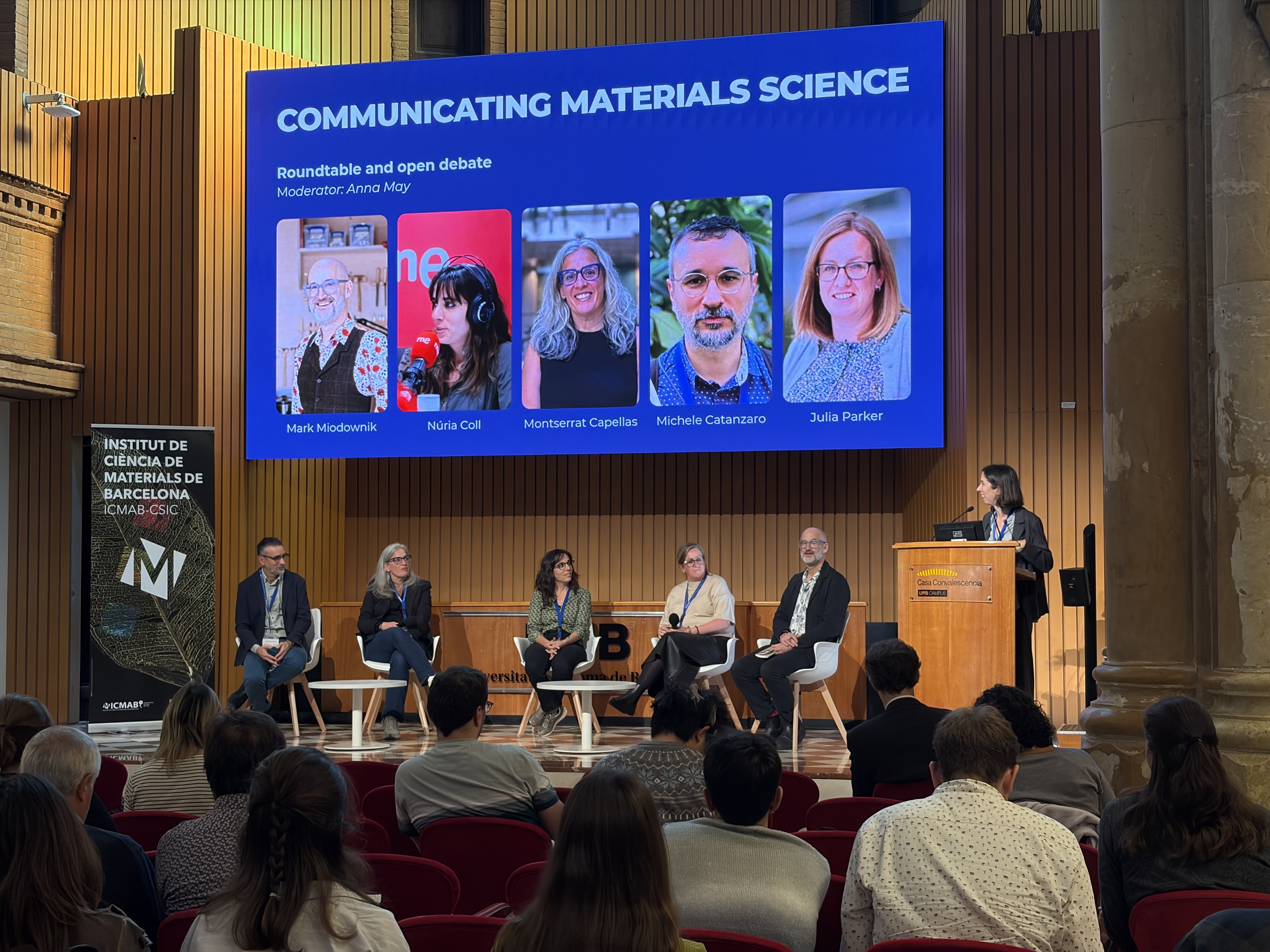
First round table with all the morning speakers, moderated by ICMAB's Head of Communication Anna May
The session addressed the dangers of hype and (over)simplification, the need to plan ahead and prepare a narrative, as well as how to build trust, acknowledge mistakes and recognise limitations. This discussion led into the afternoon session, in which participants discussed how to build a healthy scientific authority.
Journalism, academia and building trust in science
Agustí Nieto opened the afternoon session, chaired by Daniel Rodríguez, Press Officer at ICMAB. Deeply concerned about the future, he posed some uncomfortable questions to the workshop audience. Drawing on a historical perspective, he argued that science is ultimately validated by society as a whole, beyond peer-reviewed publications. While scientists may find it shocking that certain unscientific topics have entered the public sphere, he argued that this is precisely a space worth engaging with and defending. Science must participate in debates with broader audiences, even if doing so sometimes means stepping outside the boundaries of scientific precision.
Laura Francés brought the workshop to a close with a talk about the profession of science journalism. Building on Michele Catanzaro's earlier contribution, she offered the journalist's perspective on how to establish a relationship of trust and coordination between journalists and researchers. For instance, she highlighted the importance of understanding media deadlines and timelines, and of providing journalists with as much relevant information as possible ahead of a paper's publication. To help researchers better understand how science journalism works, she discussed the criteria journalists use to select stories, the questions journalists normally ask, how the narrative around a scientific finding is constructed, and the role scientists play in shaping it.
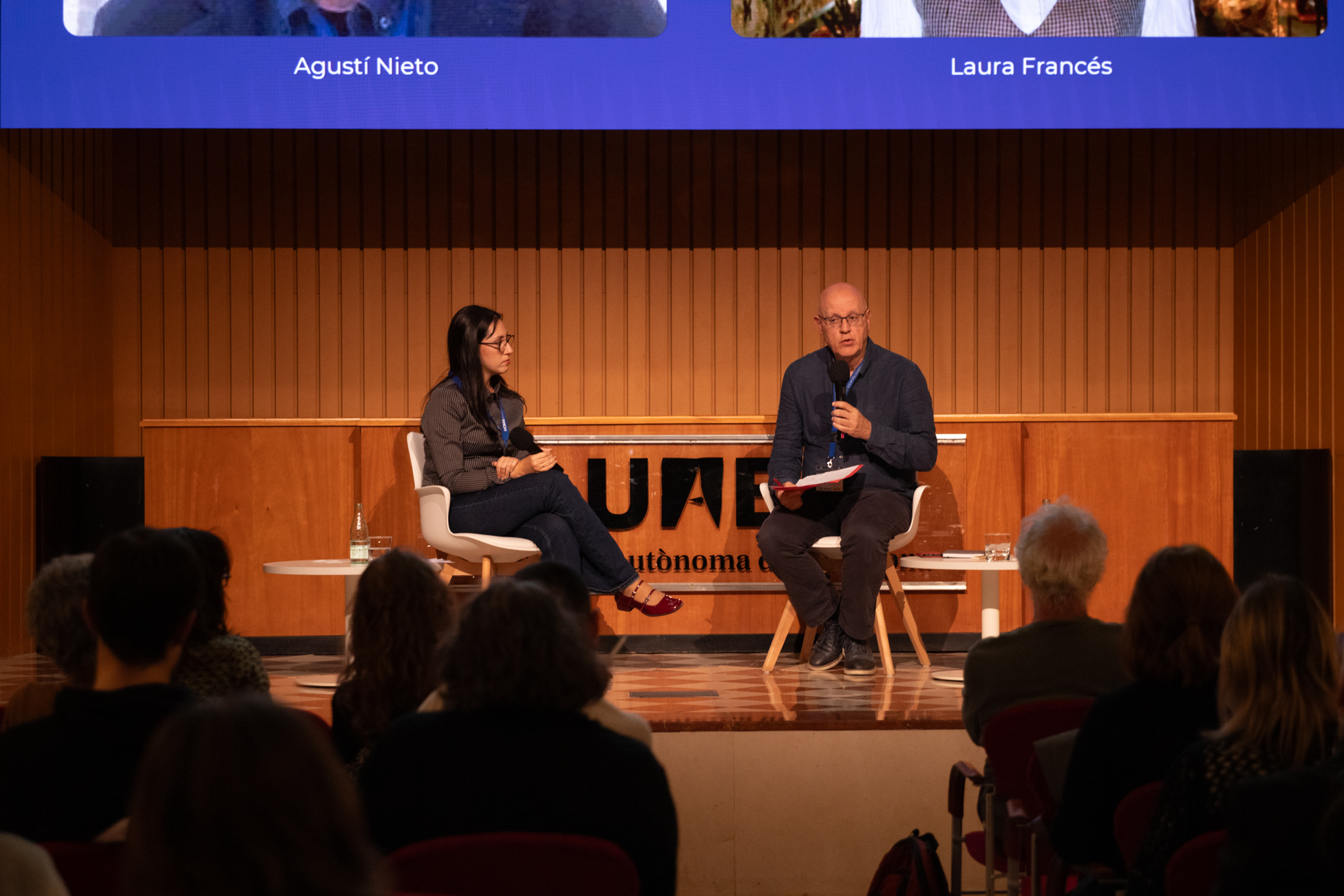
Second round table with the afternoon speakers, moderated by ICMAB's Press Officer Daniel Rodríguez
Throughout the day, interesting ideas from different experts were shared, and a dialogue was started about what needs to be communicated about science: not only scientific facts, but also methodologies, limitations and mistakes. Relationships were another recurring topic, from those between researchers and journalists to those between researchers and other societal groups through citizen science projects and participation in public debates. The value of the workshop was clear in the conversations among participants. However, some questions remained unanswered: could one of the ultimate goals of science communication be to create scientific knowledge collectively, bringing together different actors? And how do the workshops' broader reflections apply to fundamental science?
In a rapidly evolving world, staying up to date and continuing these discussions is essential. At the ICMAB Communication Unit, we have reflected on some of the key takeaways. One of them is the role of (public) science institutions in taking the lead in identifying what is worth communicating in the public interest, while also taking time to develop these topics in depth. We hope to see you at a second edition!
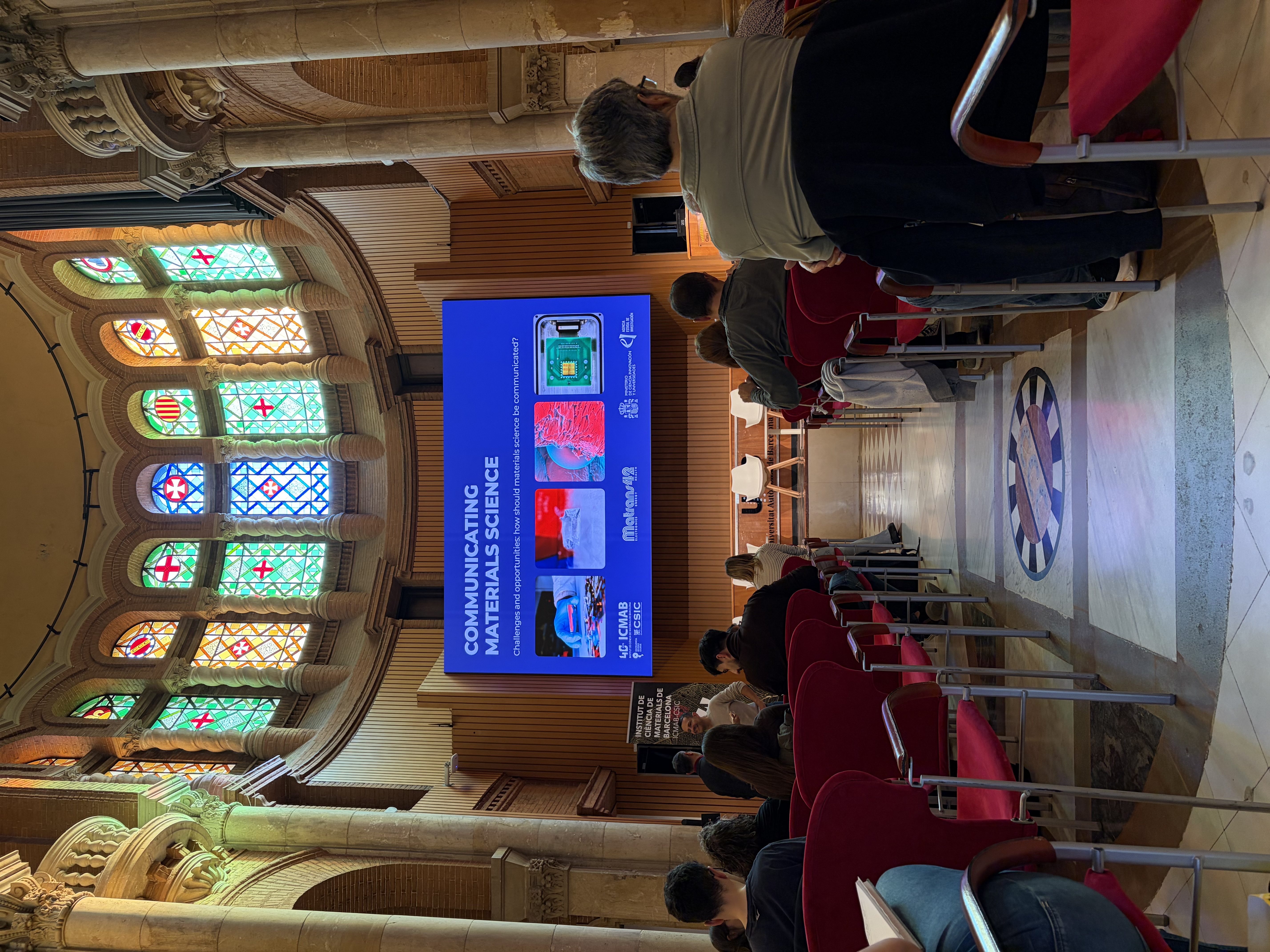
UAB's Casa de Convalescència was a great venue for the event
More information:
I ICMAB Workshop on Scientific Communication: Communicating Materials Science
