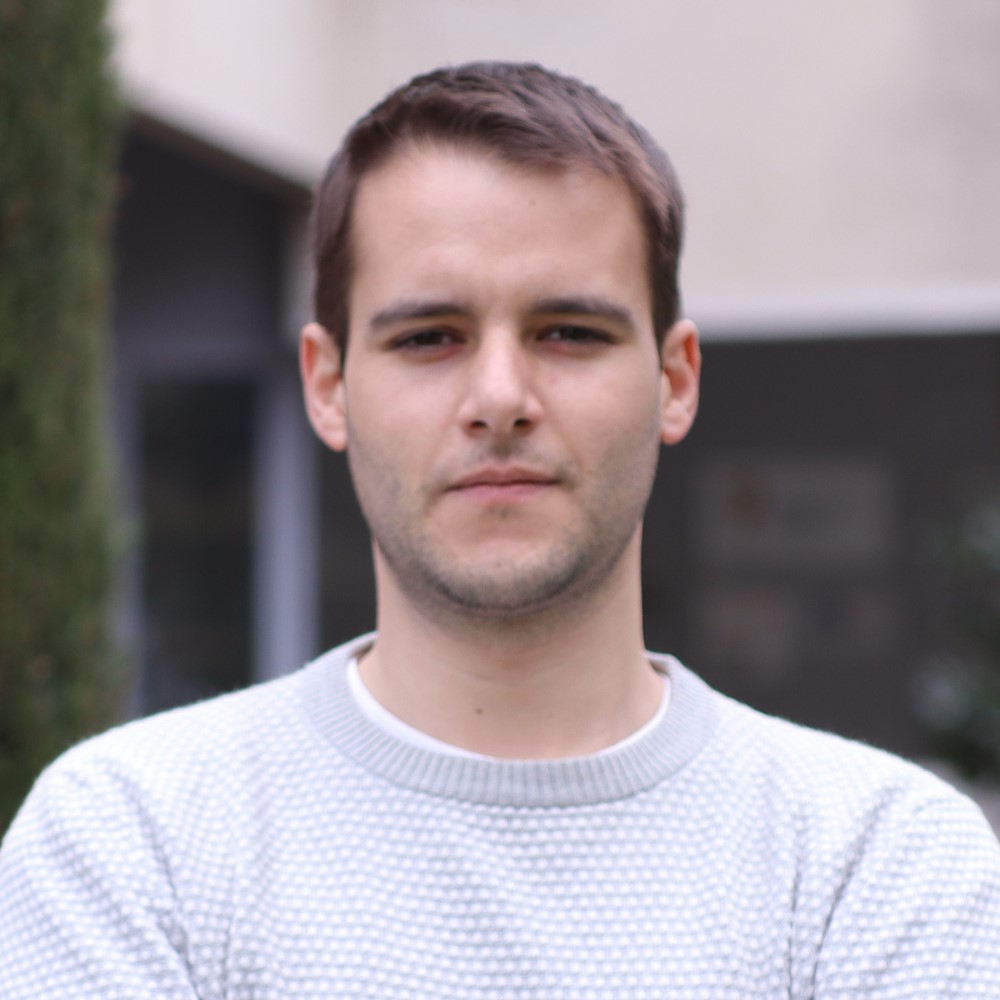


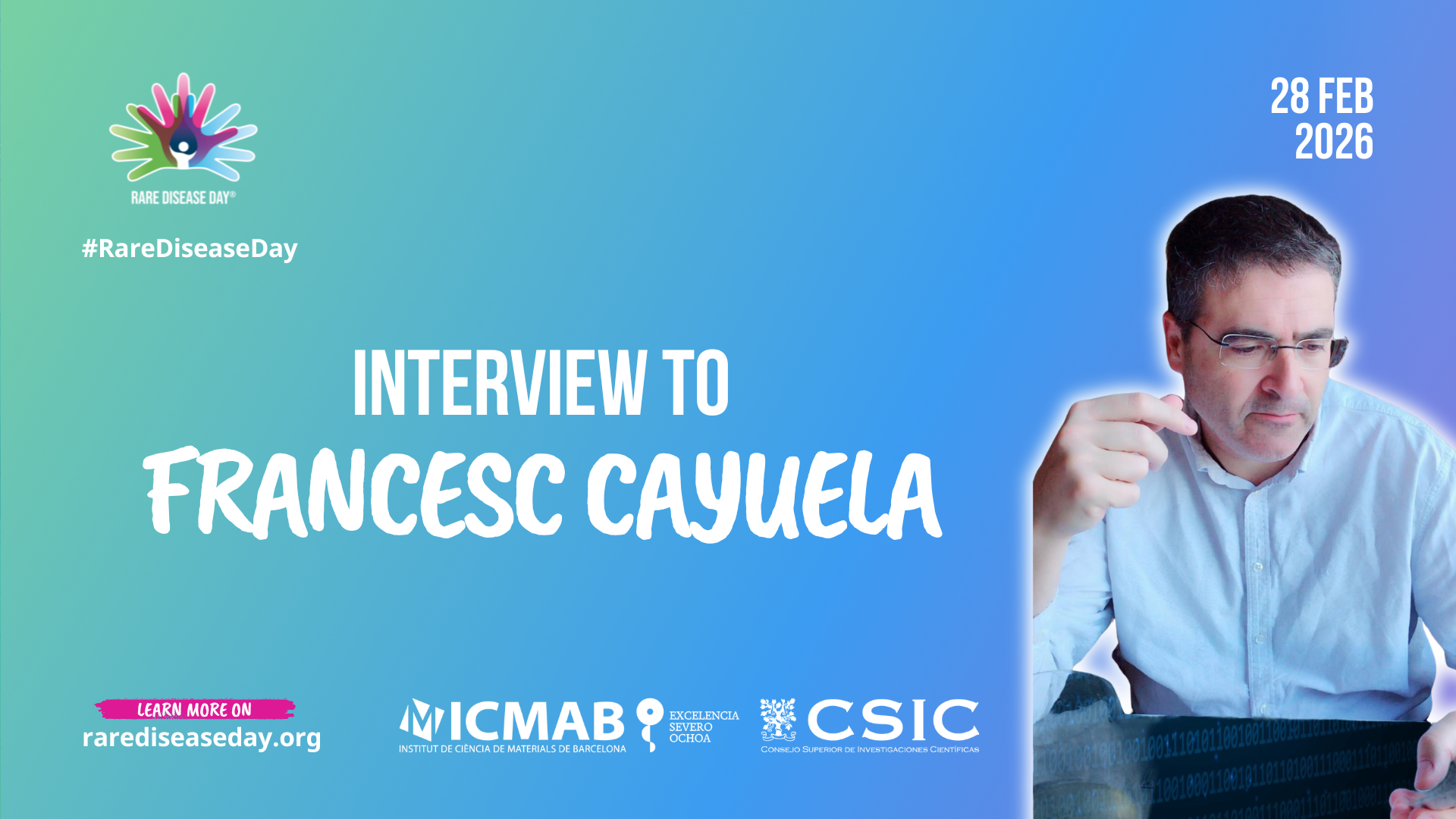
Francesc Cayuela is the director of the Catalan Federation for Rare Diseases (FECAMM) an organisation created in 2004 to bring together associations and families affected by rare conditions in Catalonia. As Rare Disease Day approaches, he reflects on the scale of the challenges that remain in diagnosis, data collection and social support, and on the urgent need to connect patients, families, research centres and public institutions more effectively. His insights highlight both the extent of the unmet needs and the collective effort required to improve the lives of the many people in Catalonia who may be living with a rare disease.
Could you explain what FECAMM is and what its purpose is?
"Although around 11,000 rare diseases exist worldwide, only about 2,000 are registered in Catalonia, leaving many invisible, especially those affecting women"
However, a major challenge is the large number of people and conditions not yet represented. Although around 11,000 rare diseases exist worldwide, only about 2,000 are registered in Catalonia, leaving many invisible, especially those affecting women. Based on prevalence estimates, around half a million people in Catalonia could be living with a rare disease, yet only about 50,000 appear in CatSalut records.
What are your main projects at the moment?
The main projects under development include expanding FECAMM membership and FECAMM Dona, a book named The Ten Invisibles of Women (Els 10 invisibles de les dones), photography and cinema sessions, promoting a law for Memory and Research, or develop a data lake and open-data platform, among others.
Through both FECAMM and Patient73, these projects seek to improve visibility, generate knowledge and build a stronger network for people living with rare diseases.
What role do patient associations play in addressing rare diseases?
Patient associations currently play a fundamental role, although much of the responsibility they carry should fall on the healthcare system. Families and patients provide mutual support, raise funds, promote research and cover gaps that public services do not address. Without this collective effort, the situation for people living with rare diseases would be significantly worse.
"Many of these responsibilities should be supported by the health system, so that families can focus on care, daily life and emotional well‑being"
In an ideal scenario, many of these responsibilities should be supported by the health system itself, so that families can focus on care, daily life and emotional well‑being rather than on navigating complex administrative and medical challenges.
FECAMM contributes by advocating for legal and institutional changes, promoting public awareness and creating links between health authorities, research centres, hospitals, innovation groups and patient organisations. For the patients and association, our federation also provides practical tools for associations, such as high‑quality photography exhibitions that they can use for their own local fundraising and community activities.
What do you think is the most important role of patient associations, and where is there still room for improvement?
The most important role of patient associations is to gather knowledge, share information and help improve the overall care and support available to people living with rare diseases. Their core mission should be to ensure that patients receive the best possible attention and that families are supported in managing their daily lives.
There is still room for improvement in building stronger international links, so that associations can access up‑to‑date open data and learn from solutions that are already proving successful in other countries. Better access to this shared knowledge would help improve medical care, education, social support and the broader needs of people living with rare diseases, including emotional wellbeing and a fulfilling social life.
What are the main challenges that people with a rare disease face in their daily lives?
Daily life is also affected by how programmes are coordinated and by the difficulty of generating and applying new knowledge. We are working on two projects to address this: one to create an open‑data bank with information from different rare diseases for research, and another to develop a law that would allow the automatic use of data from people who unfortunately pass away, so that the information and experience from their lives can help patients worldwide.
What kinds of partnerships can research centres build with patient associations like FECAMM?
The first thing I want to do is thank research centres for dedicating your professional lives to this field. You could choose many other sectors that are easier, better paid or less demanding, yet you decide to stay here and help create new knowledge and a more dignified society for people living with rare diseases.
As for partnerships, I believe we need a more multidisciplinary system and a larger scale of collaboration. Research centres, tissue banks, federations, associations, families and patients should work together under a more organised structure. The goal is to manage everything as smoothly and efficiently as possible so that we save time and accelerate progress across diseases. When we make an advance in one condition, the information should move quickly to another so that all knowledge can be used and shared.
That is the kind of alliance we should aim for in the future. And again, thank you for choosing this path.
"Women were the invisible within rare diseases, which are the invisible part of society"
You have recently launched the FECAMM Dona initiative. What does it focus on?
It has taken us 22 years to realise that women themselves were the invisible within rare diseases, which are the invisible part of society. This year we want to give visibility to conditions that affect women most or exclusively, and to give voice to what women think and to what they feel is not working. We also want to recognise the role of women as caregivers at home and the many disadvantages they face, as well as their roles in research and in hospitals.
We first planned FECAMM Dona as a one‑year project, FECAMM Dona 2026, but once we started working on it, we saw how unjust the situation was. Now it will be a permanent division, FECAMM and FECAMM Dona, focused on equality and visibility. Women with immune‑related rare diseases take 50 per cent longer to receive a diagnosis, three to five years, because their conditions are less known. When we shared this, the story appeared in La Vanguardia and on TV3, which helped raise awareness.
As a complement, we are writing a book, The Ten Invisibles of Women, which gathers these injustices. I will not list them all, so you have a reason to buy the book and help us continue our work.
FECAMM recently announced that women with rare diseases take longer to receive a diagnosis. What could research do differently to improve this?
From research centres, the task is to generate this knowledge and integrate it into broader cycles that offer more complete solutions. We need to move away from the current system of separate silos and build more integrated approaches. When you discover or learn something from one disease, you should quickly look for an equivalent that applies to a condition affecting women, which is almost certainly less studied. Using that as a support, you can see how knowledge from one disease can be transferred to another and then brought into automated systems that make diagnosing women easier and faster.
How can citizens support FECAMM and FECAMM Dona?
The second way, depending on what each family or company can afford, is to spread the word, make donations, or support any of the nine projects we are working on. Any help with resources, time, materials or funding allows us to put people to work and develop these projects in more depth.
Our goal this year is to reach 4,000 families, to begin correcting the bias between the half‑million people who should be registered with a rare disease and the roughly 50,000 who currently appear in CatSalut records. Ideally, we would like all those people to be part of the federation. Even if each individual feels they are very few, together we can build the strength, the scale and the shared knowledge needed to change this harsh reality into something better.
This interview has been done within the frame of the Nano4Rare Project. Thank you, Francesc Cayuela, for the interview, and special thanks to Guillem Vargas and the entire Nanomol-Bio Group for their support and coordination.


More information: