

From his master’s thesis to the start of his PhD, Adrià López has been building a career defined by curiosity, interdisciplinarity, and a desire to apply scientific knowledge to real-world challenges. Along the way, he had a key experience: taking part in the ALBA hackathon, where his team won the challenge proposed by ACCIONA with a project based on supercritical CO₂.
A vocation born from scientific curiosity
“When I finished high school, I was torn between studying chemistry or nanoscience,” Adrià recalls. In the end, he chose the Bachelor’s Degree in Nanoscience and Nanotechnology at the UAB, attracted by its multidisciplinary nature: “I liked being able to explore many areas of science, and nanoscience allowed me to do just that. Looking back, I wouldn’t change it for anything.”
After completing his degree, he wanted to deepen his training and pursued a Master’s in Industrial Chemistry and Introduction to Chemical Research, also at the UAB, where the second semester was entirely devoted to the Master’s Thesis (TFM). “I wanted a real research experience, one that would allow me to dive deeper into lab work and keep learning in a hands-on way.”
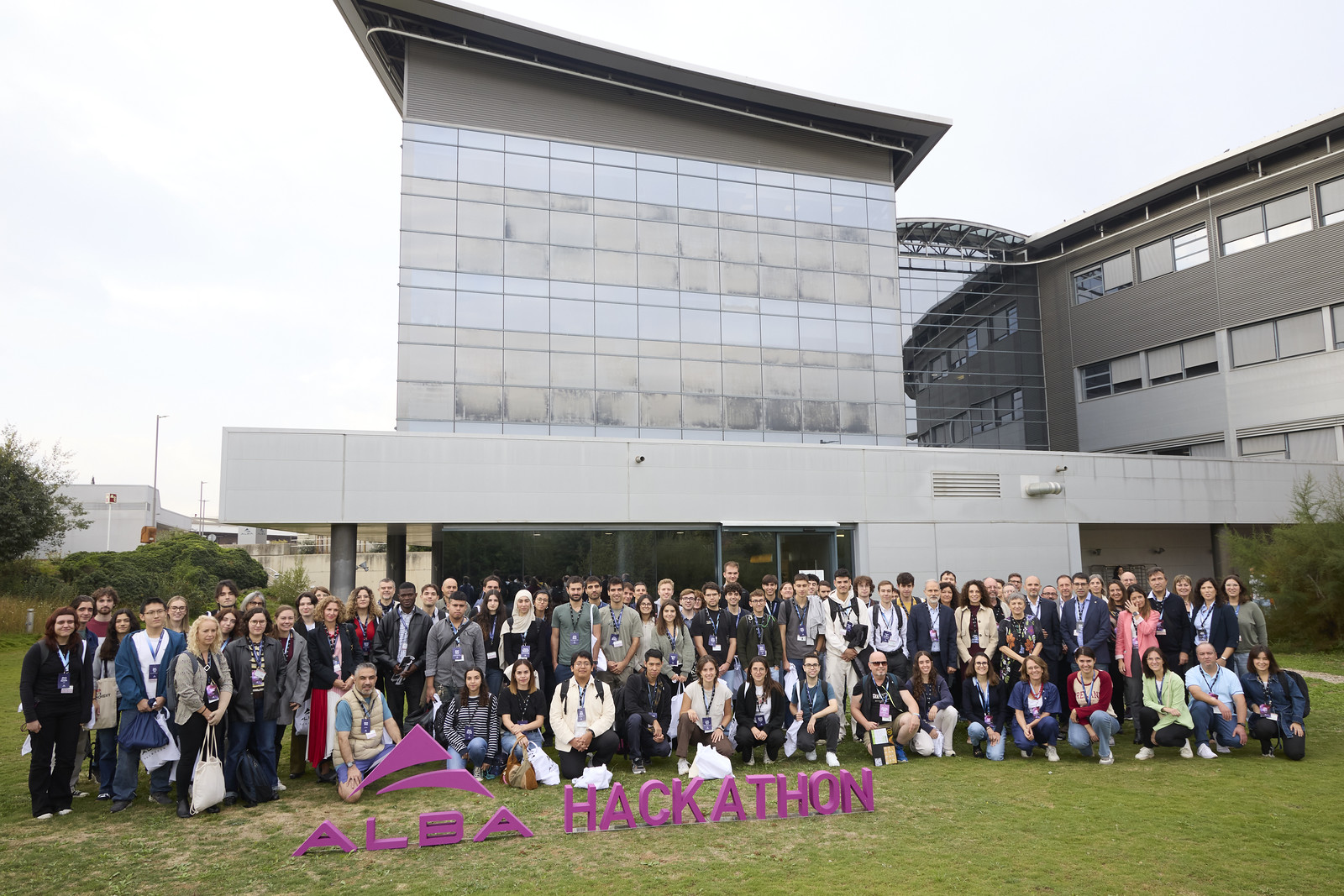
Participants at the ALBA Hackaton | UAB
The Master’s Thesis: hybrid materials to turn CO₂ into value
When it came time to choose a research group, Adrià joined ICMAB-CSIC, in the Supercritical Fluids and Functional Materials group led by Concepción Domingo and Ana M. López. “I didn’t know the field at all, but it immediately caught my attention, and I thought it was the perfect opportunity to learn.”
His project focused on designing porous hybrid materials by combining copper species with Metal-Organic Frameworks (MOFs) and graphene oxide aerogels synthesized using supercritical CO₂ as a sustainable solvent. The goal: to catalytically transform CO₂ into methanol, a value-added chemical product.
“I came in with no experience in synthesis or high-pressure equipment, and I learned from scratch how to synthesize materials and interpret results from techniques like X-ray diffraction or nitrogen adsorption isotherms.”
This work was recognized as a finalist for the SOCIEMAT Award for Best Master’s Thesis in Materials Science—an acknowledgement he describes as “a great motivation to keep moving forward.” The awards ceremony was held during the World Materials Day event, on 5 November 2025, organized by SOCIEMAT.
Knowledge transfer in action: the ALBA Hackathon experience
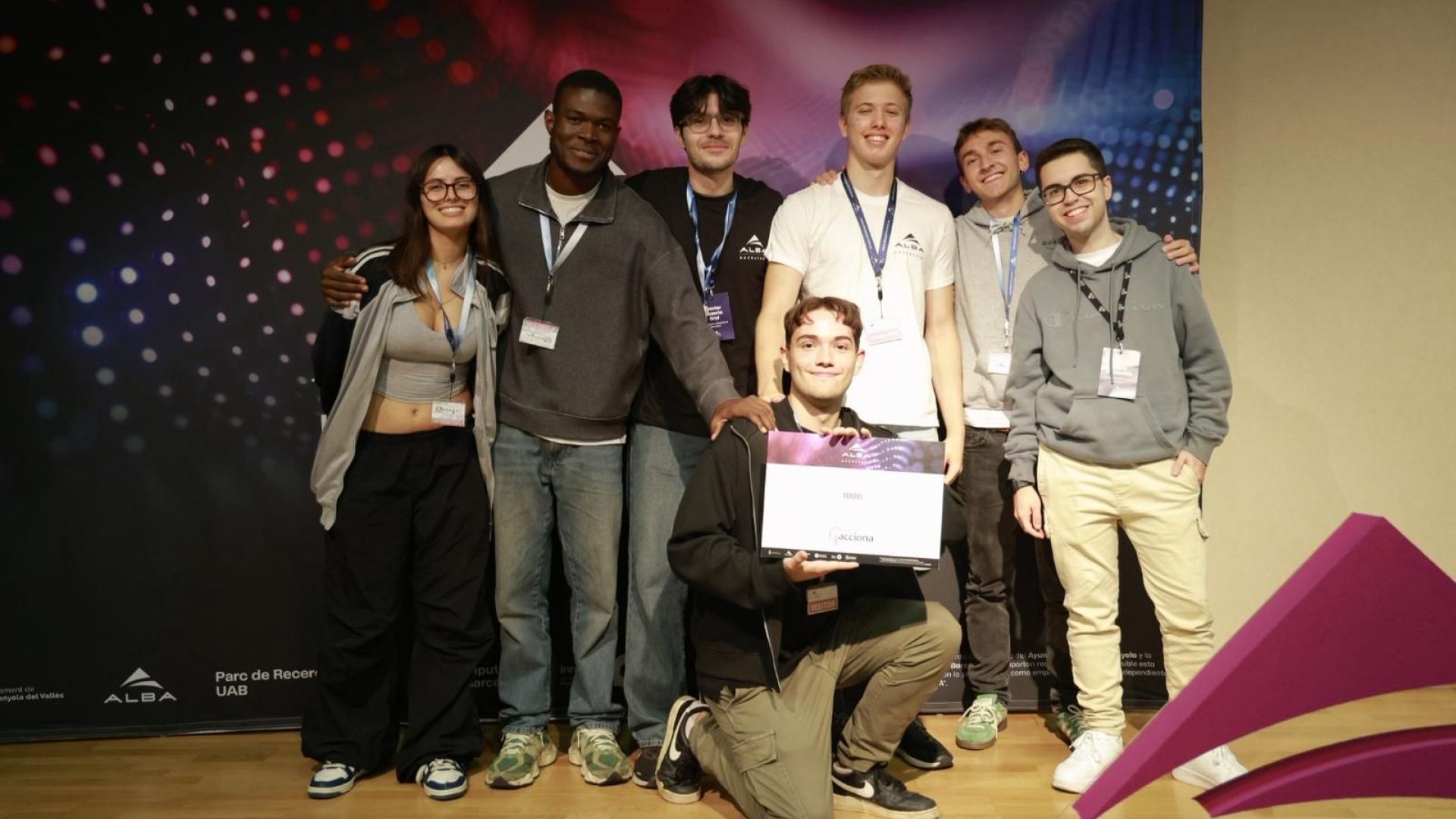
Between his Master’s Thesis and the start of his PhD, Adrià decided to take part in the ALBA Hackathon on 16-17 October 2025, an initiative promoted by the UAB Research Park, the City Council of Cerdanyola del Vallès, and the ALBA Synchrotron, connecting young researchers with companies and real-world challenges.
“The hackathon format seemed very appealing to me. I’d always been interested in these kinds of events, but I thought they were only for programmers. When I saw there was one for scientists, I didn’t hesitate to sign up.”
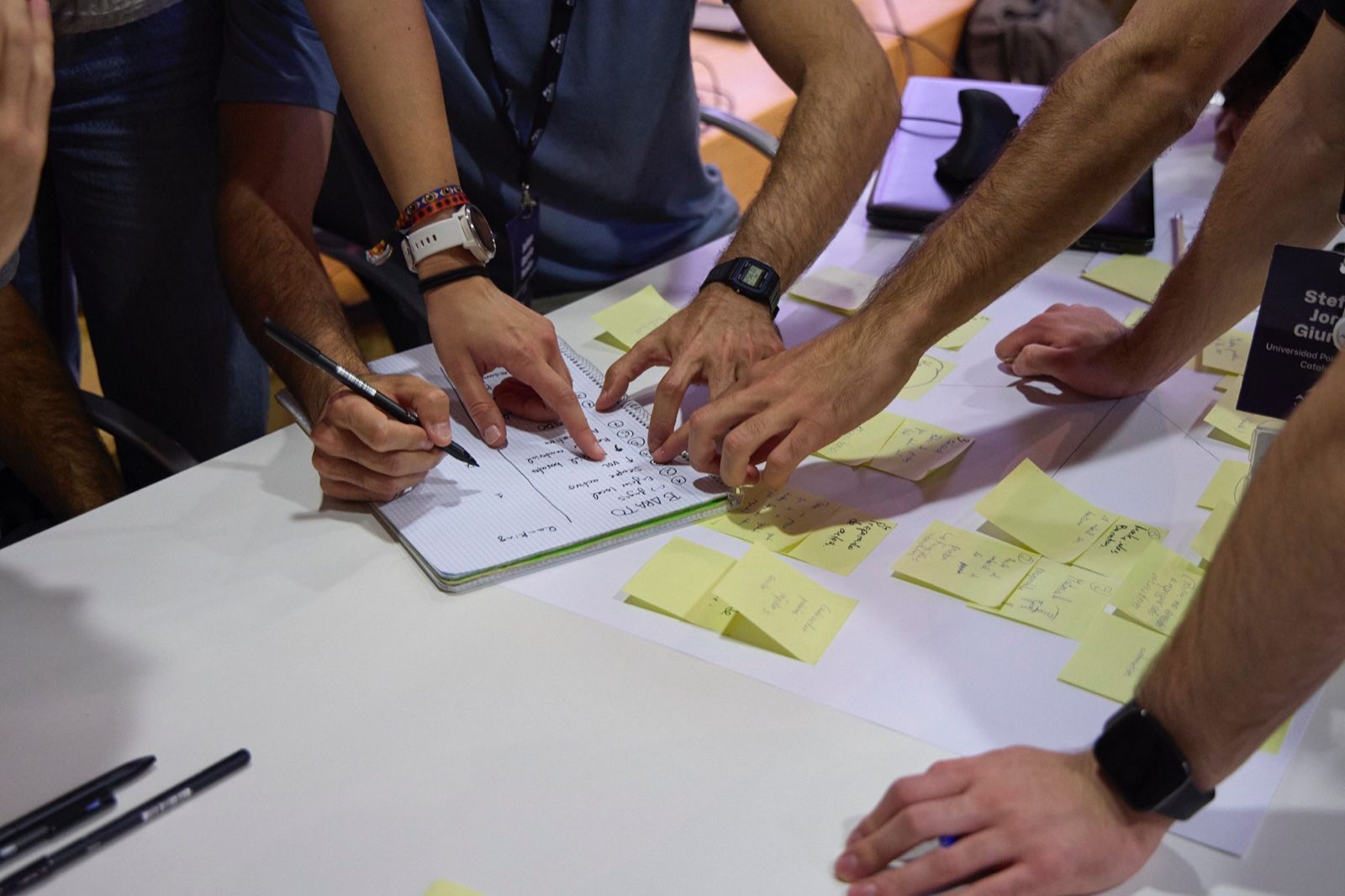
His team was assigned the challenge proposed by ACCIONA, focused on regenerating adsorbent materials used to remove contaminants (PFAS) from water. In just a few hours, they designed a solution based on using supercritical CO₂ to regenerate saturated activated-carbon adsorbents.
“When I heard ‘supercritical CO₂,’ something clicked in my mind. I knew my group had a lot of expertise in that field, and that the idea could work.” The proposal—named Critical-Carbon—won the challenge.
Beyond the monetary prize, the victory also brought the opportunity for ACCIONA to conduct real experimental tests at the ALBA Synchrotron, using synchrotron light to study the materials’ porosity and effectiveness. “It’s exciting to think that an idea conceived in just a few hours might actually be tested under real conditions,” he says.
The ALBA Hackaton was celebrated on the 16 and 17 of October of 2025 | UAB
From applied research to the PhD
Now, Adrià has just started his PhD in the same ICMAB group, this time also under the supervision of Alejandro Borrás, supported by an FI-STEP fellowship linked to the research line on porous hybrid materials for catalytic CO₂ conversion.
“The PhD project is a natural continuation of what I did for my Master’s Thesis. Now I have four years to expand on the experiments and explore other possible applications.”
Although at first he had a very different view of what a PhD would be like, he admits that his experience in the group and contact with other doctoral candidates changed his perspective: “I thought it would mean being locked in the lab all day doing experiments that fail and feeling constant frustration. But I discovered that doing a PhD is also about learning to organize yourself, attending conferences, doing research stays abroad, receiving training, and, above all, growing as a person.”
For those considering following the same path, his advice is to listen to themselves and know what they want: “Even if you’re unsure about the future, ask yourself what motivates you. I don’t know exactly what I’ll do next, but I know I want to experience everything the PhD has to offer—knowledge, experiences, and opportunities. Only then can you truly discover where you want to go.”
Adrià López’s journey is an example of how education, curiosity, and opportunities for knowledge transfer can come together to retain and foster young talent in our center.
At ICMAB, we celebrate that his story shows how research not only generates knowledge but also creates connections and inspires vocations.
Read more:
- ALBA Hackathon (16-17 de octubre de 2025): ALBA Hackathon · ALBA (Indico)
- ALBA Hackathon | Parc de Recerca UAB
- Science and talent join forces at the ALBA Synchrotron to solve tech problems in 48 hours - Universitat Autònoma de Barcelona - UAB Barcelona
- Conectamos Universidad y Empresa | Parc de Recerca UAB
- Premios SOCIEMAT - Sociemat
- Jornada SOCIEMAT Universidad de Sevilla Día Mundial de los Materiales - Sociemat
- ICMAB - Supercritical Fluids and Functional Materials
- Photo album of the ALBA Hackaton
