

The Spanish National Research Council (CSIC), an organization attached to the Ministry of Science, Innovation and Universities, took part this week in the Science for Industry (S4i) forum, the largest international meeting dedicated to knowledge and technology transfer, with a specialized focus on Deep Science and disruptive technologies. The forum brings together the main players in the innovation ecosystem with the aim of accelerating the transition from science to market. It is organized by the Autonomous University of Madrid (UAM) and BeAble Capital.
The CSIC presented 21 technological projects and prototypes. Three CSIC centers in Catalonia participated in the forum: the Barcelona Microelectronics Institute (IMB-CNM), the Institute of Environmental Assessment and Water Research (IDAEA), and the Barcelona Institute of Materials Science (ICMAB).
CSIC President Eloísa del Pino highlighted that “CSIC’s participation in this event is part of one of the institution’s strategic objectives: to accelerate the production of scientific knowledge and increase its impact on society and on the industrial fabric of our country.”
Many ICMABers took part of this event. Amongst them, Judith, Esperanza and Diego!
Judith Guasch, from the DBCI research group, said: “My participation in S4i was very positive: I was able to greet colleagues at the CSIC stand, led by Javier Etxabe and Beatriz Salvador, talk with potential collaborators, and establish contact with a company with high potential for future synergies related to hydrogel technology for CAR-T therapy and organoid models.”
Esperanza Medina, from the SSC research group, said: “For me, S4i was a great opportunity and my first immersion into the world of technology transfer and EBTs. The experience allowed me to broaden my perspective on the role of research and on the different pathways that can lead, in the best-case scenario, to the creation of technology-based companies that bring research results to society, especially in our field: improving cancer therapies through the development of nanoparticles.”
Diego Gutiérrez, from the eMolMat research group, said: “Taking part in S4i in Madrid was a very good experience. Already familiar with this type of event, I was able to reconnect with researchers, identify potential collaborators from the printed electronics sector relevant to our point-of-care technology, and spark interest among students in the biotechnology field. I also attended very useful sessions on patent search tools and on the importance of promoting innovation policies.”
Devices for rapid medical diagnosis
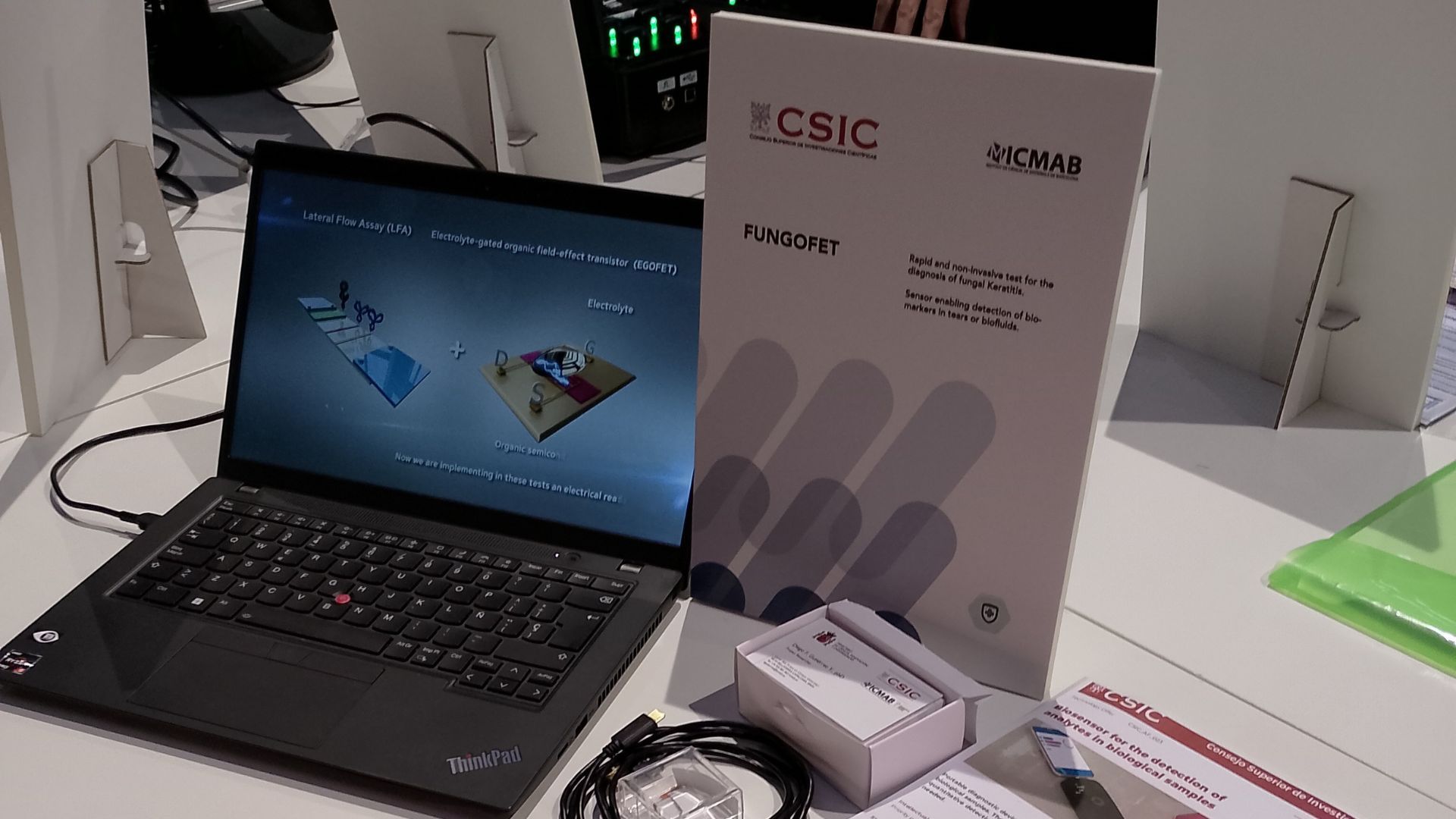
Fungofet, a project from the Barcelona Institute of Materials Science (ICMAB-CSIC), was also presented at the forum. It is a rapid test for the early diagnosis of fungal keratitis, a corneal infection caused by fungi. The sensor enables the detection of biomarkers in tears or other biofluids for the early identification of fungal keratitis. Its use in ophthalmology could improve and shorten patient treatment.
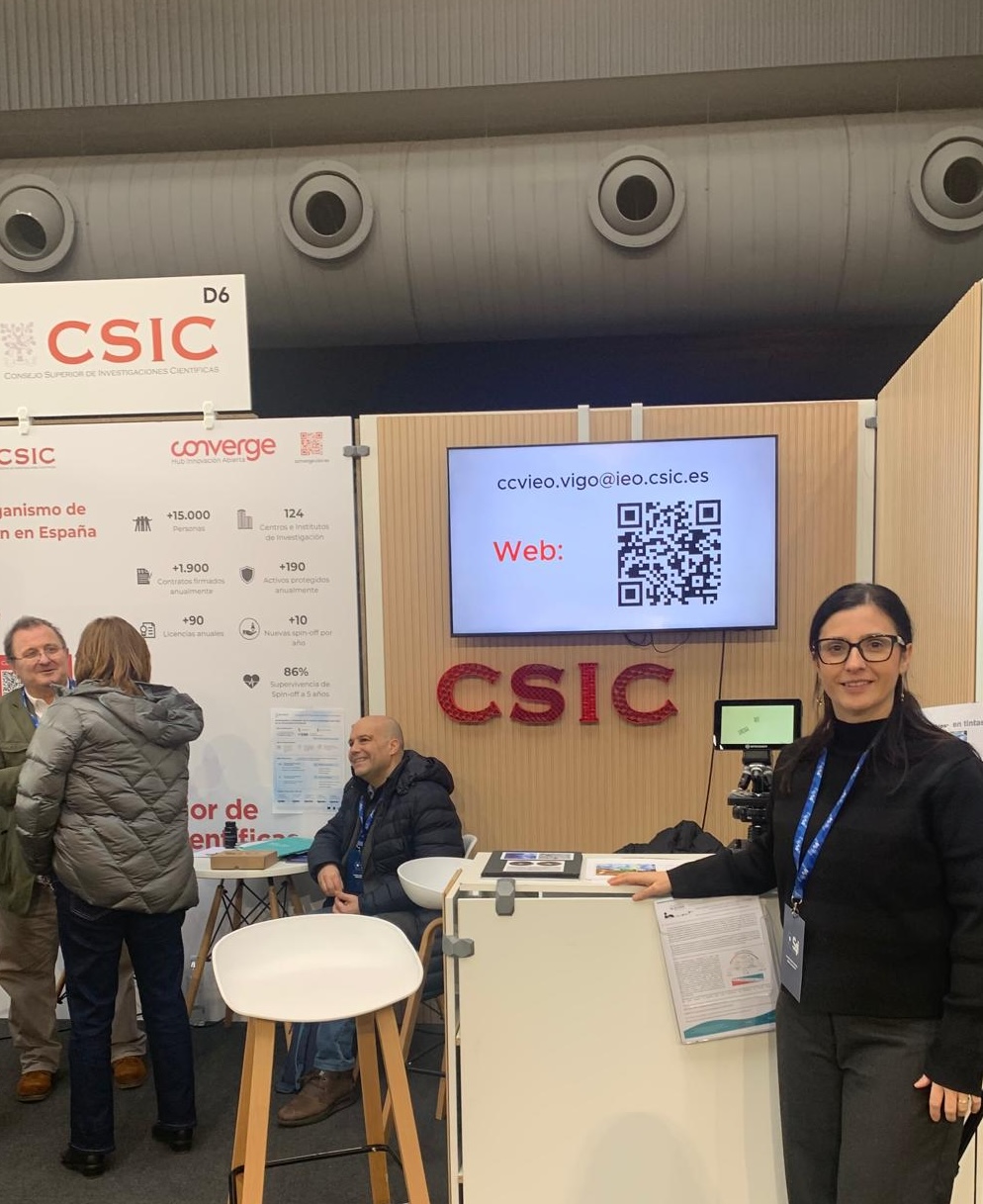
Judith Guasch was one of the ICMAB researchers that attended this event | ICMAB-CSIC
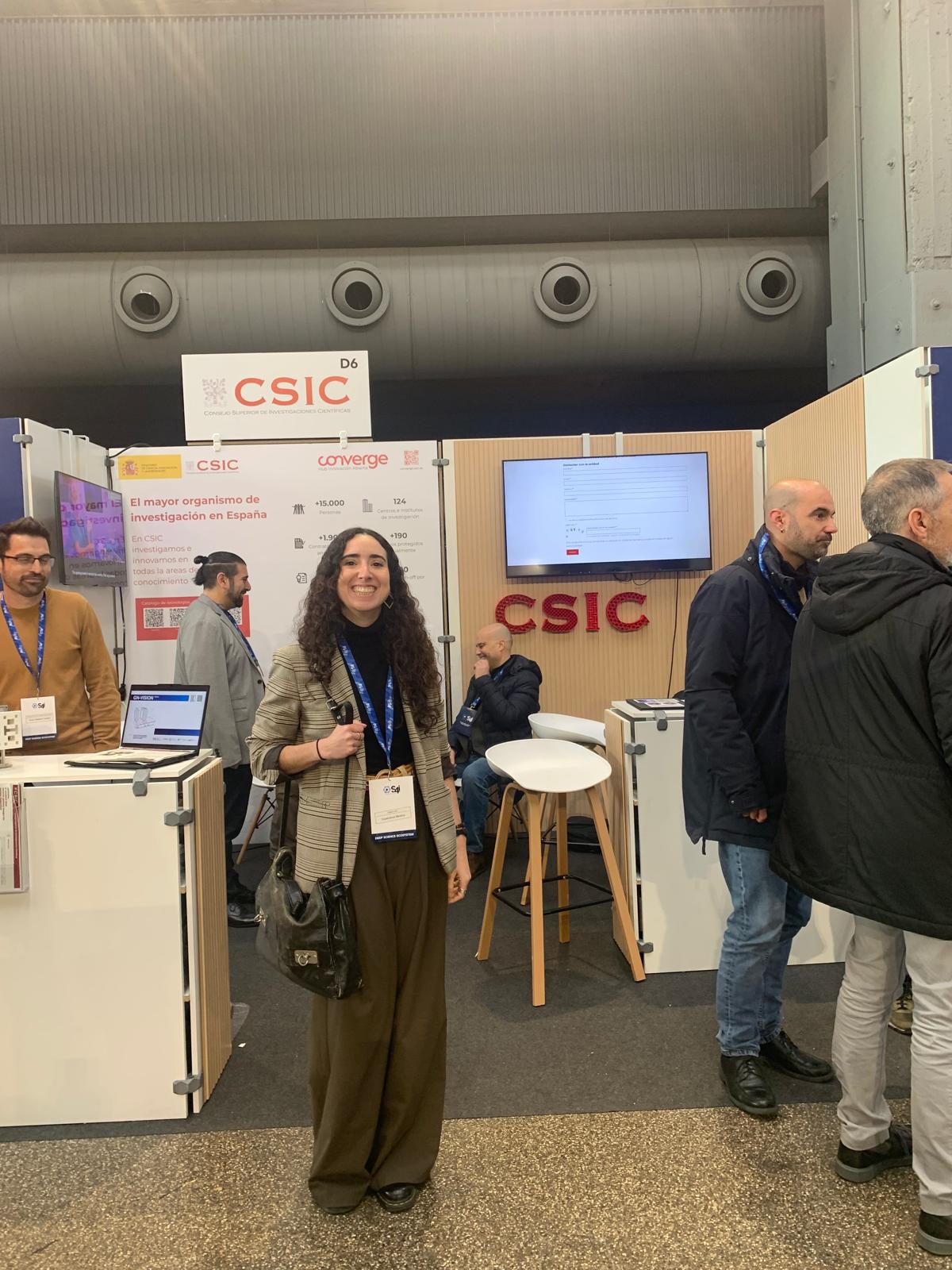 Esperanza Medina was another of the ICMAB researchers that attended this event | ICMAB-CSIC
CSIC brought a total of 21 developments to the forum, with the support of the technical staff of the Vice Presidency for Knowledge Transfer and Innovation. These technologies are part of CSIC’s technology offer catalog, which can be consulted on its website.
Read more
El CSIC lleva sus desarrollos tecnológicos al foro Science for Industry | Delegaciones CSIC
