Lung cancer remains the leading cause of cancer mortality worldwide, with a global five-year survival rate below 20%. Current therapies often generate insufficient responses and develop resistance, a challenge the scientific community is addressing from multiple angles. Understanding the tumour microenvironment better is key to achieving real clinical advances.
LUNGOIDS emerges in this context: an international project funded with €1.25 million through the European TRANSCAN-3 programme and led by researcher Judith Guasch from the Institute of Materials Science of Barcelona (ICMAB-CSIC). The project also involves ICMAB researchers Gerard Tobias and Jordi Faraudo. LUNGOIDS held its kick-off meeting with the participation of project partners: the Research Foundation of the General University Hospital of Valencia, the University of Bayreuth (Germany) and the San Gerardo Health Institute (Italy).
Over the next five years, LUNGOIDS will create artificial lung tumours to better study disease progression and to identify and refine new therapeutic strategies. These models will be developed from real patient samples. “We believe these preclinical models, which will reflect the specific features of each type of lung tumour, will allow us to reproduce tumour behaviour and treatment response much more accurately than current models”, Guasch explains.
The project aims to provide a robust experimental basis for researchers and clinicians to predict effective therapies for each patient. The platform will also allow exploring combination treatments unviable in current standard models, opening paths for testing treatments on resistant tumours.
A new generation of human tumour models
LUNGOIDS starts from a clear hypothesis: patient-derived preclinical models, that include specifically the biological characteristics of each tumoral subtype, allow a much better prediction of human tumours than the current models.
The consortium will develop patient-derived tumour organoids in a tailor-made artificial extracellular matrix, incorporating immune and stromal cells to mimic as much as possible the real-human tumour microenvironment closely.
This platform will allow studying tumour cell-environment interactions, disease progression, and responses to emerging combination therapies.
How LUNGOIDS will improve current treatments
The project combines synthetic chemistry, cell biology, and computational tools, including digital pathology and molecular modelling. The team will characterise organoids and will compare them with patient tumours and standard models.
Additionally, the platform will test innovative radio-enhancing nanoparticles, as well as immune checkpoint inhibitors, a combination with potential to enhance efficacy in non-small cell lung cancer patients.
Funded by TRANSCAN-3
LUNGOIDS is funded with €1.25 million obtained through the Spanish Association Against Cancer (AECC) and the Carlos III Health Institute, which channel European Union co-funded resources from the TRANSCAN-3 JTC 2024 network under Horizon 2020.
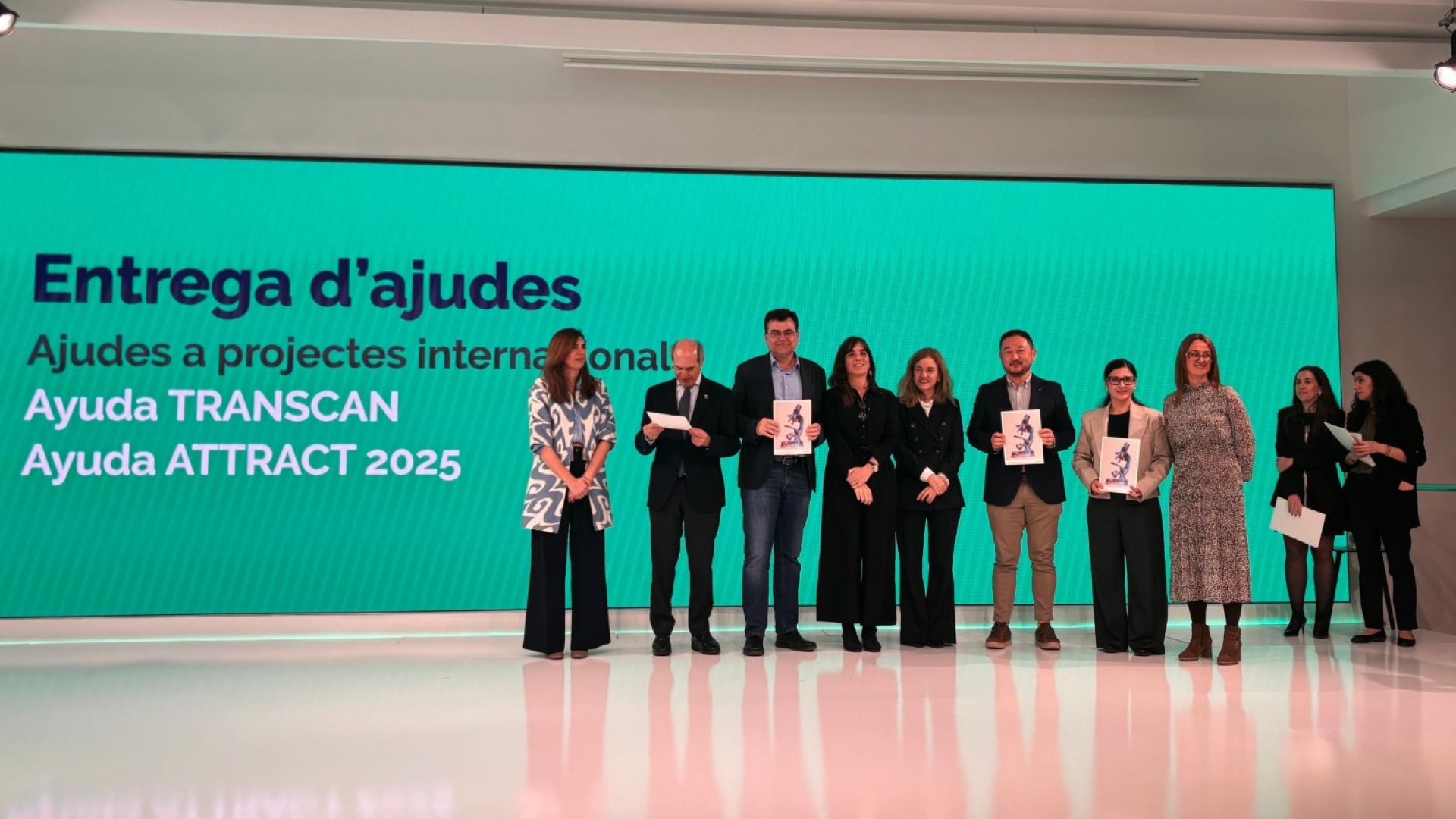
Judith Guasch, guest at AECC reception
The AECC invited Judith Guasch to its annual institutional reception, held on 26 February, which brought together researchers supported by the organisation. The event gathered institutional representatives, leaders of research centres and hospitals, AECC management and funded researchers, highlighting the organisation’s commitment to projects that drive new research avenues in low survival cancers.
Download the ICMAB press release in CAT, ESP, ENG
Related information