
Outreach News

Language exchange programme connects researchers at ICMAB

The Institute of Materials Science of Barcelona has a thriving international atmosphere with people from tens of different countries and cultures working together. Taking advantage of this diversity, ICMAB workers were encouraged to participate in a language exchange programme, promoted by our Talent Office, that started in March 2025.

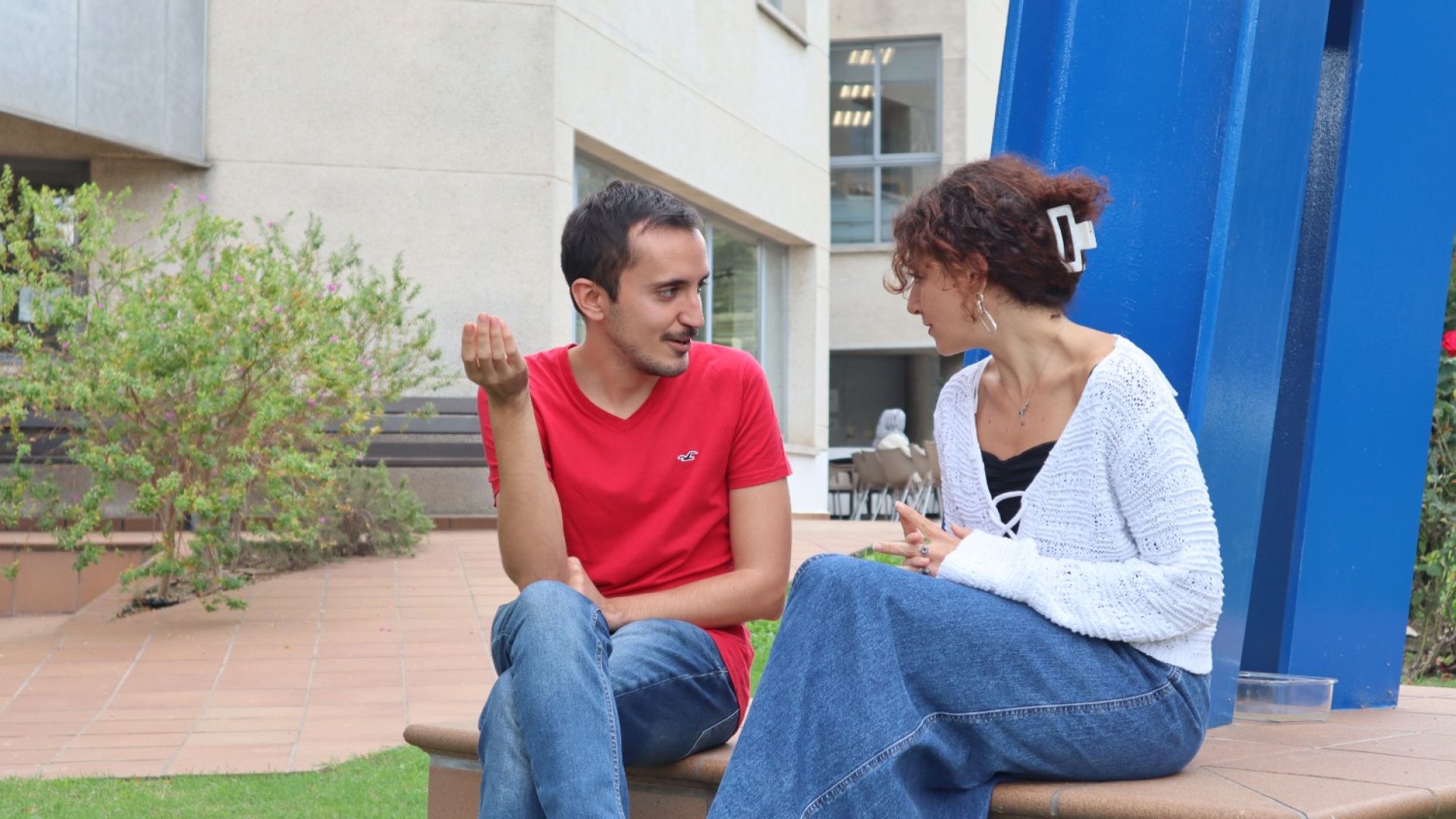
Guillem Vargas and Giulia Pancotti exchange languages | ICMAB
Giulia Pancotti is a fourth-year PhD candidate from Rome, Italy. She works with organic devices and solar cells under the direction of David Amabilino (SUSMOSYS group). Guillem Vargas Nadal is the group manager of the Nanomol-bio group and a researcher at the ICMAB and CIBER-BBN. They got in contact to exchange Italian and Catalan, willing to learn each other’s language, and have been practising regularly since July.

Why did you choose to participate in this program?

Giulia: First of all, I thought it was a very nice opportunity and a very nice initiative from ICMAB, and it was great that they spent some time organising that. I wanted to learn Catalan, because I've been here for some years, and with Spanish I'm kind of good, but without Catalan, you don't really feel fully integrated. It was something I wanted to do because I really like the culture, the fact that I'm here, I'm living here. It was a very good point to learn Catalan, in my case.

Guillem: In my case, it's because I worked one and a half years in Parma, Italy, and there I was not able to speak Italian, and this is something that I regret, because I wanted to learn the language, but I didn't have the chance. I know the very basics, but I wanted to improve, thanks to this initiative and Giulia.

How long had you been exposed to the other language?

Giulia: I do not think I am fully exposed to the Catalan language, as I normally work in English and many of the people I'm with speak English or Spanish. I tried Duolingo, but it was not enough.

Guillem: When I was in Italy, I would go to the supermarket and could ask for the basics. But not much more. I wanted to be more fluent; it was something that I missed a lot.

Giulia: Because you easily realise that our languages are very similar. So, you tell yourself: “ok, I can do the extra step and learn it”, but it's not so straightforward — you need to spend time with that, and this exchange program became a great opportunity.

How did you organise yourselves?

Guillem: We did about half an hour in Catalan, and half an hour in Italian. Both on the same day.

Giulia: Yeah, we were starting in Catalan, and then we were switching, and after the first day we were both preparing exercises.

Guillem: Giulia was way more prepared on the first day. I came with nothing (my fault), but Giulia came with a sheet of full exercises and a lot of other things. The next time I came, I had some exercises.

Giulia: Actually, I looked for a children's book… [Both laugh] I don't know exactly the level, but it was like a very basic Italian grammar with verbs. Because, actually, Guillem is kind of good in Italian, but he lacked some basics.

Guillem: In my case, before starting, I told her: “What do you want to learn?” And she said she wanted to learn some pronunciation and accent marks, because Giulia did not understand the Catalan pronunciation logic well. Therefore, I thought: “ok, so we will start learning the vowels”. And from there, we delved into the pronunciation.

Giulia: So I guess it was also an exercise for kids, too.

Do you feel you speak the language better than before?

Giulia: Yes, for the pronunciation, yes, at least. Yes, it's a basis, it's a solid base. But it was true that we both travelled a lot. Guillem went for a stay in Malaysia, we started late and then we had the summer vacations. At first it was difficult to meet, but now we will continue to do it I feel I am better at Catalan now.

Guillem: Yes, the summer was hard, I was not here for a month and a half and had to start in July. We met one week, and then August came. But after that we met much more often. I remember I could speak some broken Italian, and then she came and taught me some of the Italian tenses. “The first-person present should be this, and the second-person should be that, and then the third…” Now I feel I am good about it. We would like to continue.
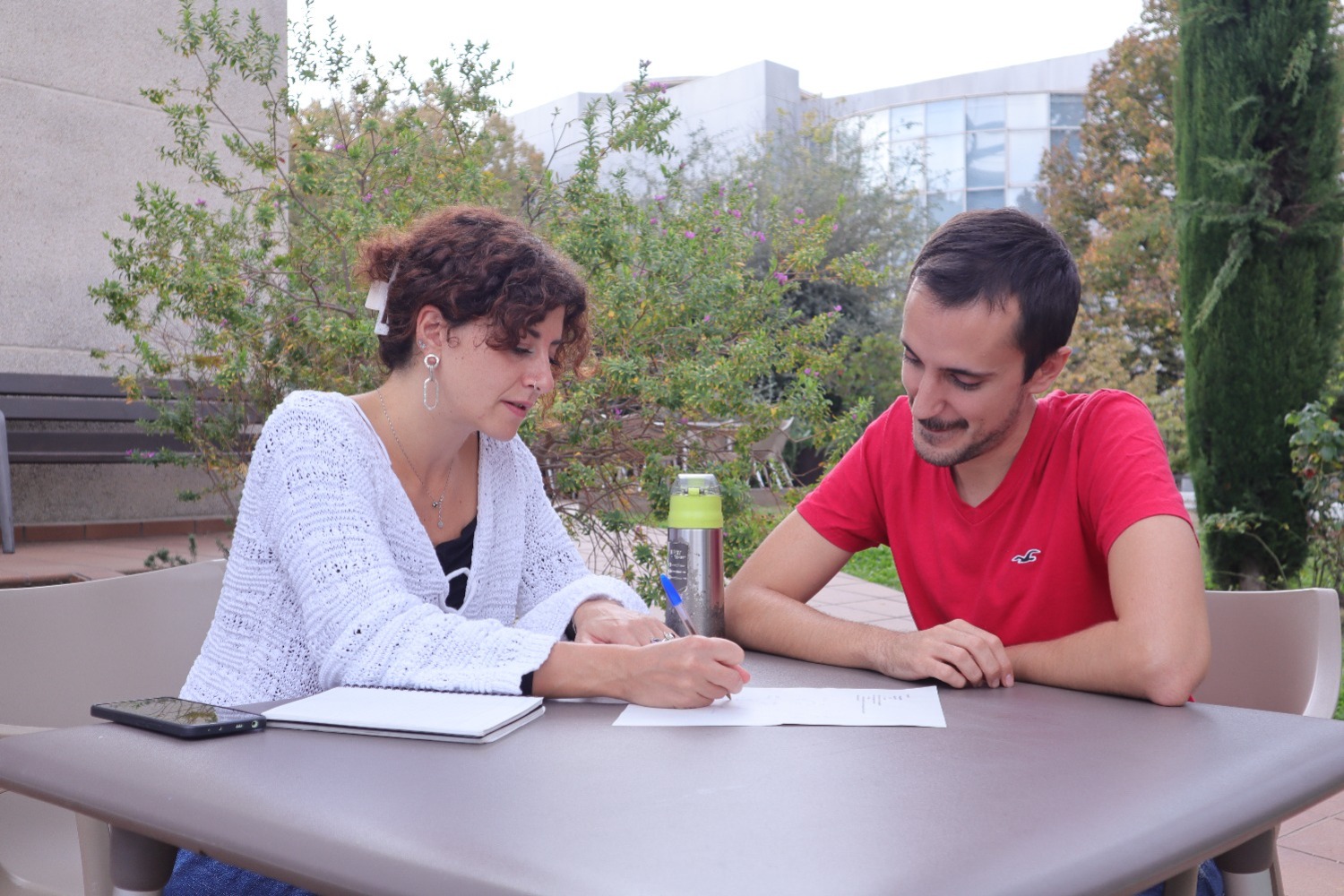
251029 Parelles linguistiques 1Guillem and Giulia during one of their lessons | ICMAB-CSIC

From what you have said, one of the problems you have found seems to have been the difficulty in finding some time. Especially with all the working travels you had, right?

Guillem: In our case, yes, I was not here in June...

Giulia: …and I wasn't here in September, basically. In our case, we weren't here for some time, but it's not a big problem, really.

Guillem: No, we found the solution. We knew that we have this limitation, but finally, when we were here, we tried to see each other to do this exchange.

Giulia: I guess the time is just the researcher’s problem.

Would you recommend this experience to other people?

Both: Yes, absolutely. A lot.

Guillem: It was very nice, actually. And also, because you meet other people.

Giulia: Before this experience, Guillem and I knew each other, and we would say hi to each other in the corridor. But now we know each other much more, too. It's nice.

Guillem: It was a very good initiative. We will continue doing it. From my side, I encourage everyone in the ICMAB to participate in this language exchange programme. It is a good opportunity that the centre offers, and you do not need to spend a lot of time doing that.

>> If you would like to participate in our language exchange programme, please contact our Talent Officer Dolors Grillo
Daniel Rodríguez Urbano
29 October 2025