


A paper on biohybrid hydrogels has been published in the journal Applied Materials and Interfaces:
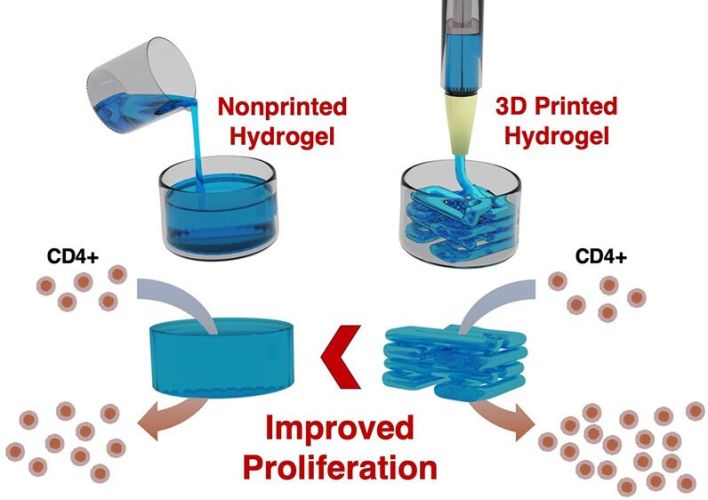
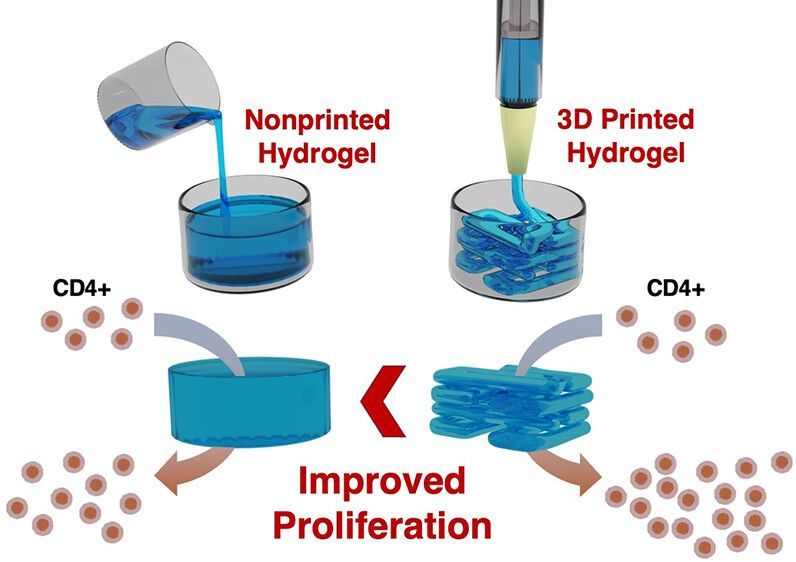
The emergence of cellular immunotherapy treatments isintroducing more efficient strategies to combat cancer as well as autoimmuneand infectious diseases. However, the cellular manufacturing proceduresassociated with these therapies remain costly and time-consuming, thus limitingtheir applicability. Recently, lymph-node-inspired PEG−heparin hydrogels havebeen demonstrated to improve primary human T cell culture at the laboratoryscale. To go one step further in their clinical applicability, we assessed theirscalability, which was successfully achieved by 3D printing. Thus, we were ableto improve primary human T cell infiltration in the biohybrid PEG−heparinhydrogels, as well as increase nutrient, waste, and gas transport, resulting inhigher primary human T cell proliferation rates while maintaining thephenotype. Thus, we moved one step further toward meeting the requirementsneeded to improve the manufacture of the cellular products used in cellularimmunotherapies.
M4HTH Smart Nanomedicine
3D Printing as a Strategy to Scale-Up Biohybrid Hydrogels for T Cell Manufacture
Eduardo Pérez Del Río, Sergi Rey-Vinolas, Fabião Santos, Miquel Castellote-Borrell, Francesca Merlina, Jaume Veciana, Imma Ratera, Miguel A. Mateos-Timoneda, Elisabeth Engel and Judith Guasch
Applied Materials and Interfaces, 2024

