In UAB Divulga, she presents her latest study on stable metallacarboranes as potential anticancer agents, including innovative DNA interactions and therapeutic applications, while in Anales de Química (RSEQ), she reflects on her career and collaborative research with Francesc Teixidor.
Article un UAB Divulga
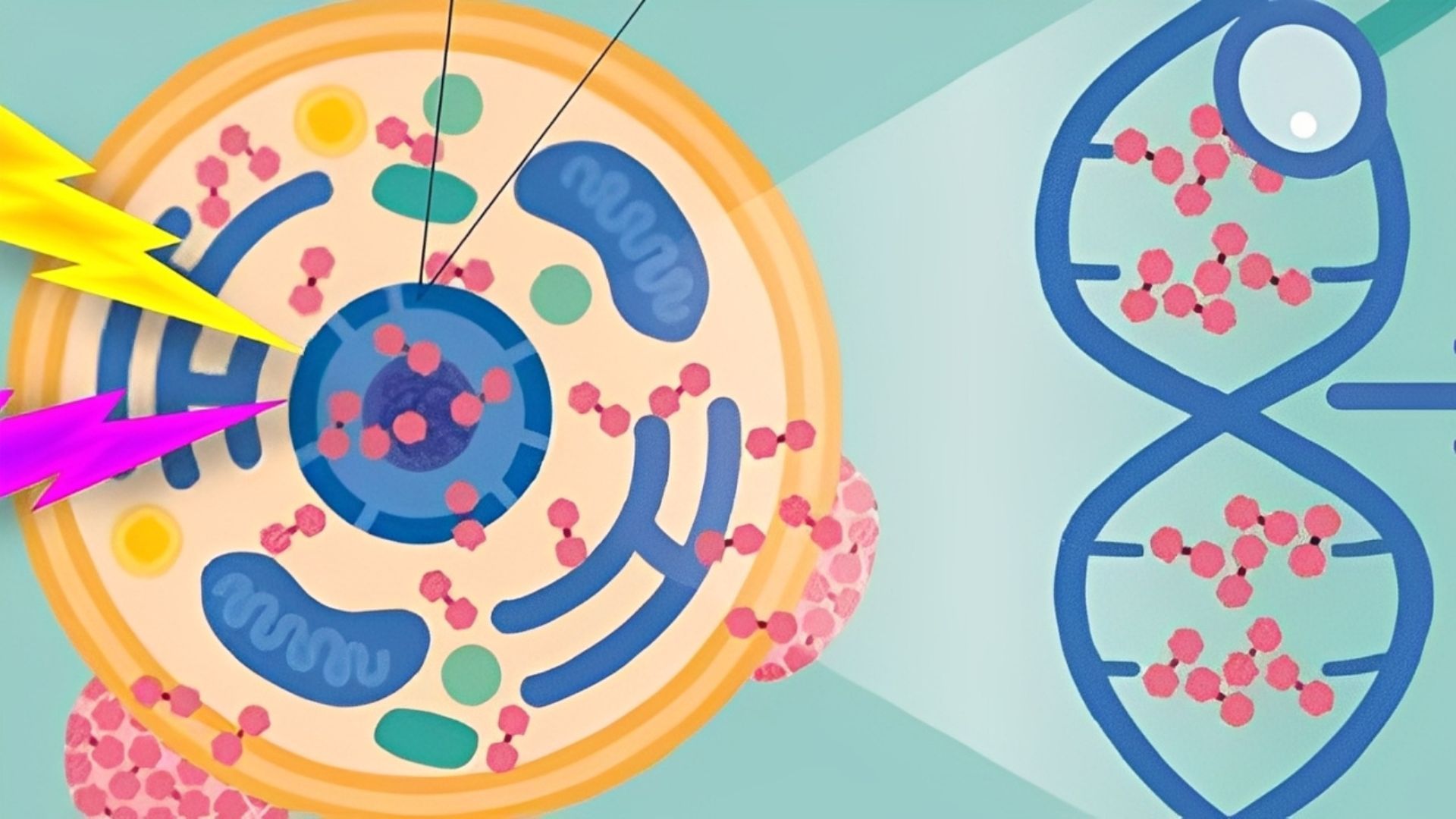
The article in UAB Divulga features the publication in the Journal of Materials Chemistry B (2024): “Compelling DNA intercalation through ‘anion–anion’ anti-coulombic interactions: boron cluster self-vehicles as promising anticancer agents” and explains the use of stable metallacarboranes as a cancer treatment. In addition to their potential as chemotherapeutic agents, these compounds can be used in innovative therapies such as boron neutron capture therapy (BNCT), which uses the boron-10 isotope, or proton-boron fusion therapy, which uses 11B and proton beams. Both strategies require boron compounds to preferentially accumulate in the nuclei of cancer cells to maximize their effectiveness.
Viñas explains that a team from the ICMAB has recently investigated how one of these boron compounds interacts with DNA and proposes that it may be an attractive candidate for the development of new anticancer drugs. Specifically, this study investigates a new form of interaction between boron-rich compounds and double-stranded DNA (ds-DNA), focusing on a specific molecule: [3,3′-Fe(1,2-C₂B₉H₁₁)₂]⁻, known as [o-FESAN]⁻.
The article in J. Mater. Chem B (2024) is part of the themed collections: Celebrating International Women’s day 2025: Women in Materials Science and 2024 Journal of Materials Chemistry B HOT Papers.
Article in Anales de Química (RSEQ)
After receiving the 2024 RSEQ Distinguished Career Award, Clara Viñas was invited to write an article for Anales de Química of the RSEQ. She took this opportunity to share her passion for boron chemistry, discussing the unique characteristics and reactivity of boron and its clusters, and highlighting her research at ICMAB-CSIC.
In this contribution, Clara Viñas not only includes the J. Mater. Chem. B (2024) work, but also offers a brief overview of the research carried out by her and Francesc Teixidor throughout their scientific careers in the Inorganic Materials & Catalysis (LMI) group. On the article, she explains the advances in synthetic methods for the effective functionalization of boron clusters that have been crucial for their practical application in various fields. The article also highlights the achievements in the areas of polymers, catalysis, sensors, and medicine in which both Clara and Francesc have participates along their scientific career at ICMAB.
Reference Articles
Compelling DNA intercalation through 'anion-anion' anti-coulombic interactions: boron cluster self-vehicles as promising anticancer agents
Laura Gutiérrez-Gálvez, Tania García-Mendiola, Encarnación Lorenzo, Miquel Nuez-Martinez, Carmen Ocal, Shunya Yan, Francesc Teixidor, Teresa Pinheiro, Fernanda Marques, Clara Viñas
J Mater Chem B. 2024 Oct 2;12(38):9550-9565
DOI: 10.1039/d4tb01177e
Boro: de sus orígenes en el desierto a aplicaciones pioneras en energía, materiales y medicina
Clara Viñas Teixidor
Anales de Química de la RSEQ, 2025, 121, 1
DOI: 10.62534/rseq.aq.2008 (Download here in PDF)
Stable metallacarboranes as potential chemotherapeutic agents
Clara Viñas Teixidor, ICMAB-CSIC, Esfera UAB
UAB Divulga, 8 Oct 2025 (Catalan, Spanish, English)