


A new paper has been published in the journal Phylosophical Transactions A.
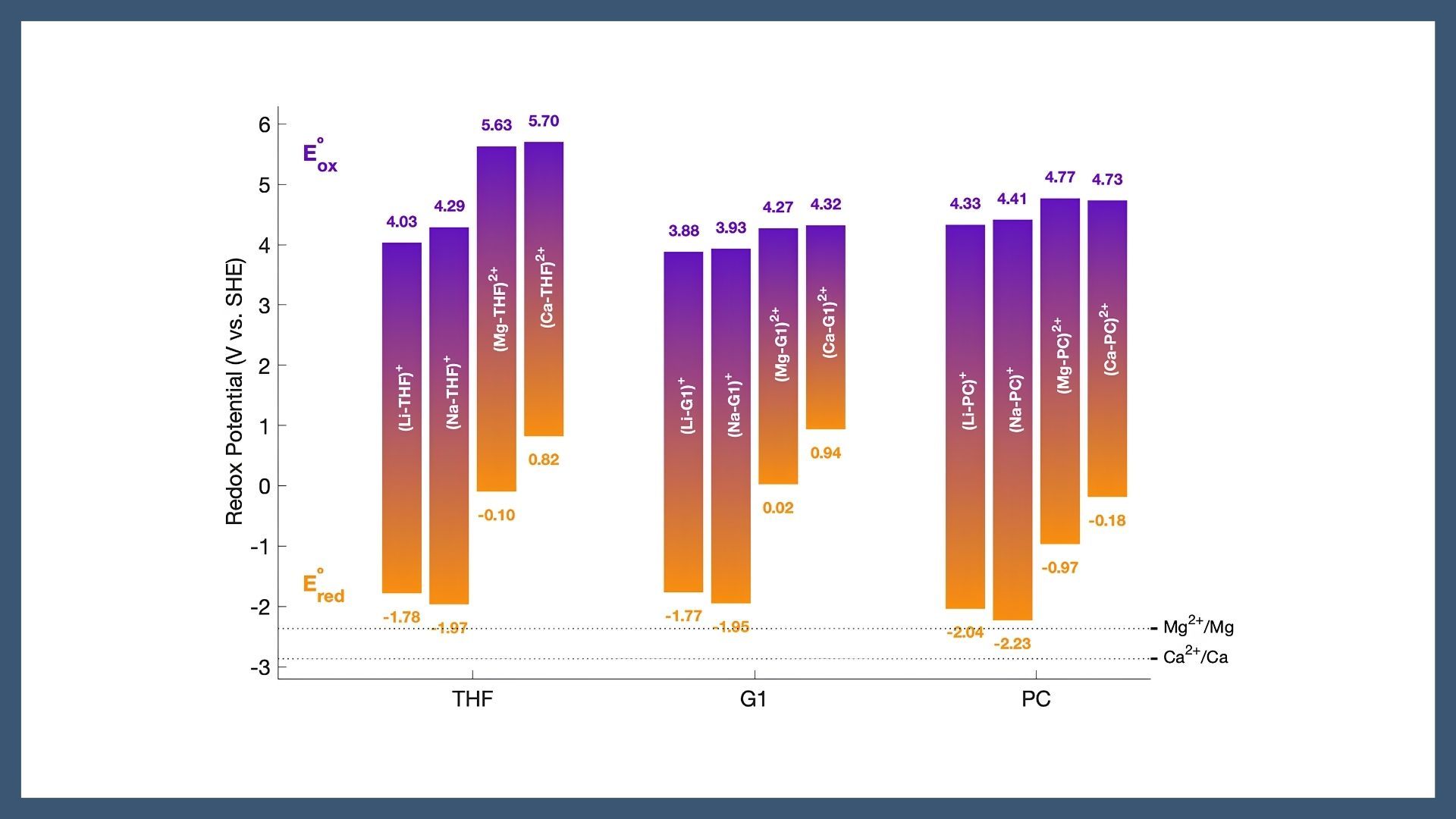
High-voltage rechargeable batteries require precise control over thermodynamic and kinetic factors to prevent electrolyte decomposition at both electrodes, thereby ensuring stable operation and minimizing degradation. Organic electrolytes offer a wider electrochemical stability window than aqueous ones but are typically limited to approximately 3 V. To enable high-voltage operation and long cycle life, the formation of stable passivation layers or interphases is essential. These interphases form through the precipitation of insoluble electrolyte decomposition products, driven by the collective behaviour of electrolyte components under battery conditions, where the cation solvation structure plays a crucial role in determining decomposition pathways. At the electrode–electrolyte interface, steep potential gradients and altered solvation environments further influence interphase formation and decomposition mechanisms.
This perspective examines the relationship between cation solvation structure and interphase composition, particularly for divalent cations (Ca²⁺ and Mg²⁺), and highlights key areas for improvement in experimental protocols, electrolyte purity, and interphase characterization. Addressing these challenges will enhance both battery performance and the reliability and reproducibility of data in this emerging field.
M4NRG Clean Energy
Ca and Mg batteries: tuning interphase and electrolyte stability through cation solvation structure
Deyana S. Tchitchekova; Tjaša Pavčnik; Alexandre Ponrouch
Phil. Trans. R. Soc. A (2026) 384 (2330): 20250279
DOI: 10.1098/rsta.2025.0279

