

A new paper has been published in the journal ChemPlusChem:
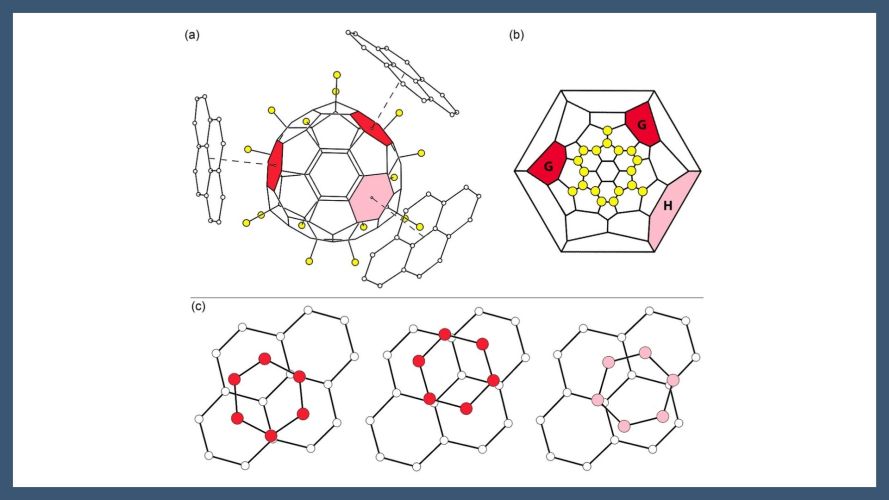
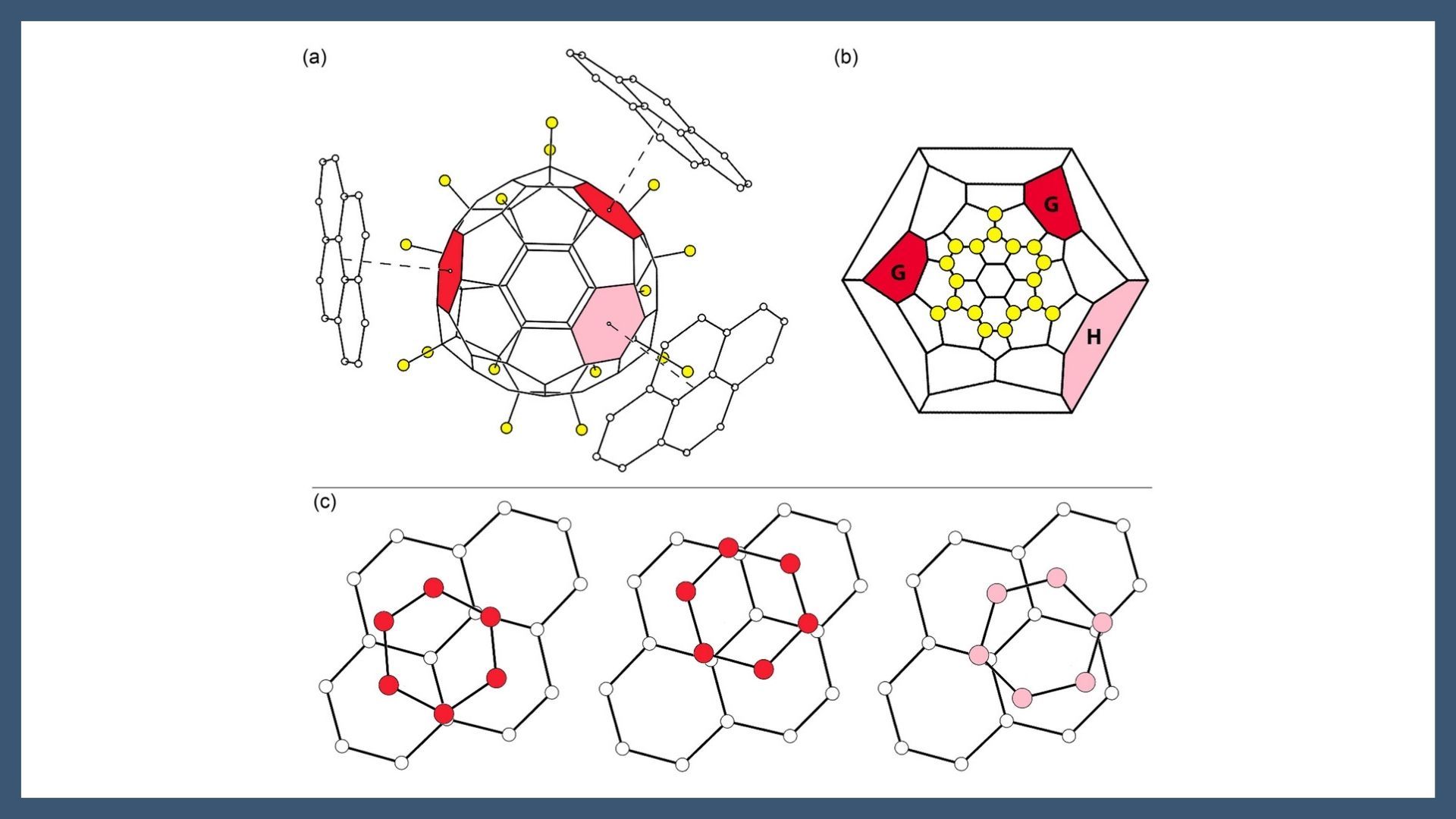
An in-depth study of donor–acceptor (D/A) interactions between the high-dipole acceptor C60F18 (A) and polycyclic aromatic hydrocarbon (PAH) donors—pyrene, perylene, and coronene—reveals a surprisingly strong PAH size influence on the D/A complex stoichiometry and ordering in co-crystals. The crystallographic study shows the tendency of D/A mixtures to form stacked layered structures for the larger PAHs, perylene and coronene, while the role of aromatic π–π interactions diminishes, in contrast to the smaller pyrene/C60F18 system. The behavior of the layered-D/A assemblies is investigated by utilizing sequential deposition and co-evaporation of C60F18 and coronene on Au(111) surfaces. Scanning tunneling microscopy shows that the flat lying configuration adopted by coronene on the metal, which forms highly ordered close-packed monolayers stabilized by the interaction between their π electrons and the high density of gold surface states, hinders the formation of the ordered assemblies of the corresponding co-crystal. The influence of the substrate plus the critical role played by electronic and steric effects in the co-crystal formation are believed to cause the lack of viability. However, it is remarkable that, on the surface, adsorbed single C60F18 molecules are well centered on top of one coronene molecule, facilitating charge transfer between D and A molecules.
M4ELC Sustainable Electronics
Donor-Acceptor Interactions of C60F18 with Polycyclic Aromatic Hydrocarbons: Size Effects in Bulk Crystallization and Surface Constraints
Deweerd, Nicholas J.; Balser, Sebastian; San, Long K.; Palacios-Rivera, Rogger; Strauss, Steven H.; Barrena, Esther; Chen, Yu-Sheng; Ocal, Carmen; Martin-Jimenez, Daniel; Boltalina, Olga V.
DOI: 10.1002/cplu.202500243

