


A new paper has been published in the journal Biophysical Chemistry:
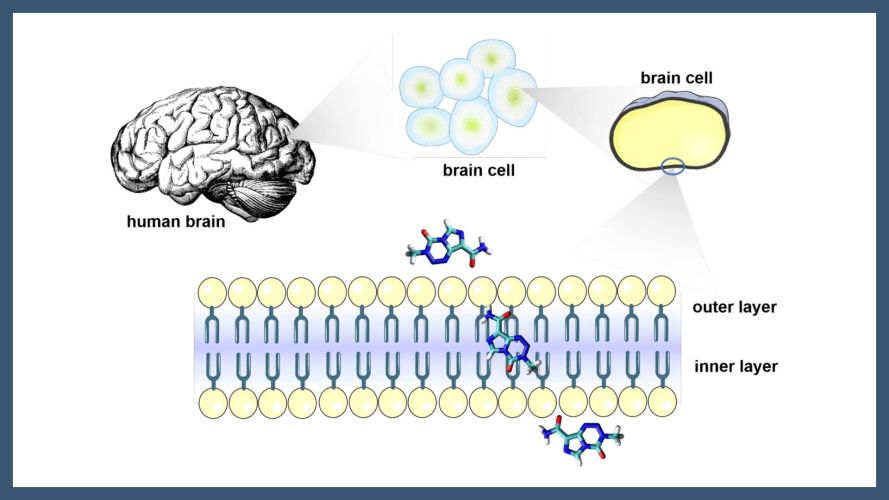
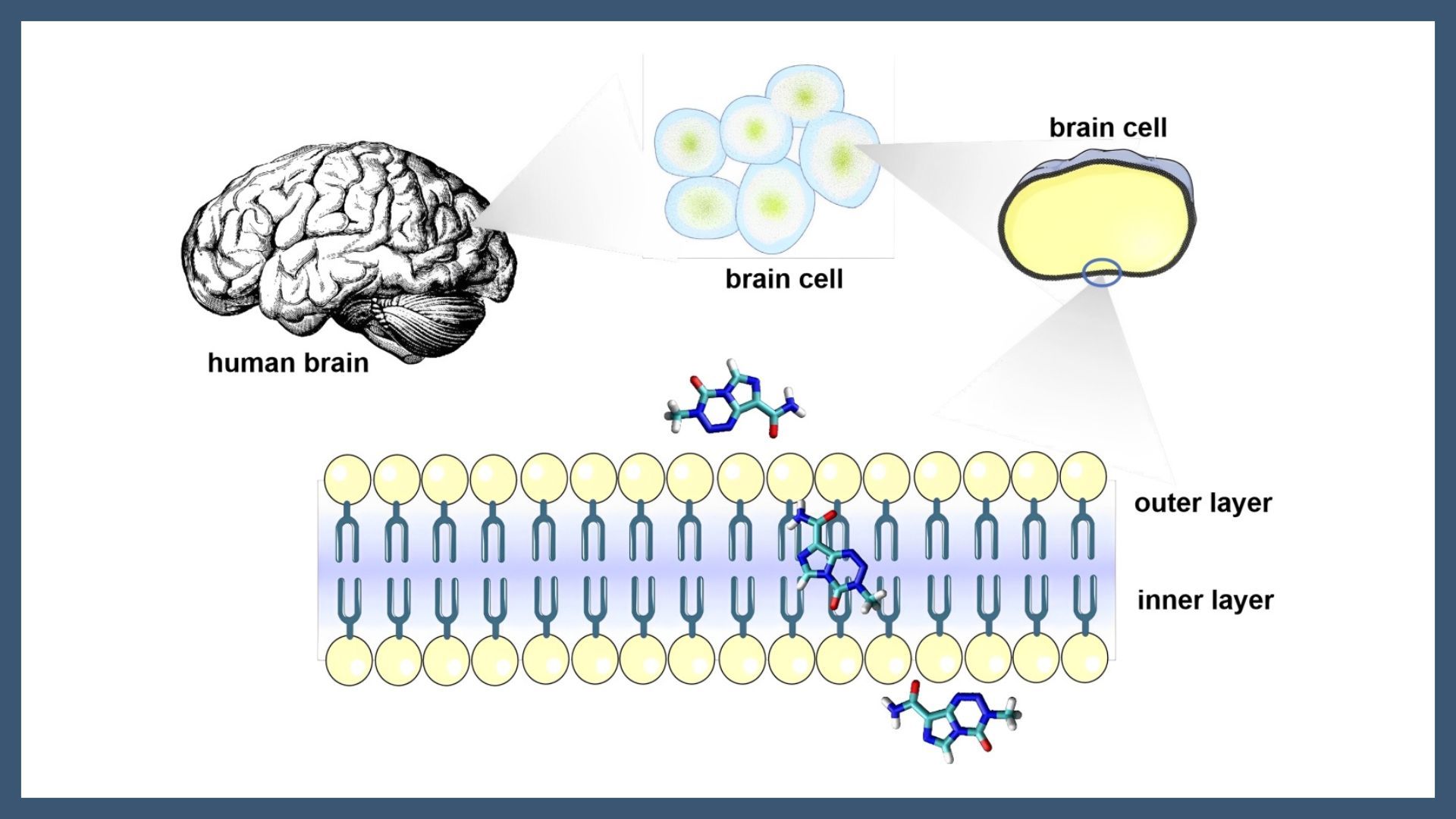
Temozolomide, a small-molecule drug, is primarily used to treat glioblastoma, a tumor that attacks both the spinal cord and brain. Understanding how Temozolomide interacts with different lipids within the brain cell membrane at the atomic level can help elucidate its ability to permeate through cell membranes. In this study, we constructed a simplified brain plasma membrane model to explore the microscopic structure and dynamics of Temozolomide using all-atom microsecond-scale molecular dynamics simulations. Temozolomide is typically found in the solvent-aqueous fluid surrounding the brain membrane, but it can access the membrane interface regularly and eventually bind to lipids of the choline and cerebroside classes. To investigate the free energy barriers of Temozolomide related to its crossing of brain-like plasma membranes, we employed adaptive biasing force methods. These simulations revealed that the free energy barriers ranged between 28 and 50 kcal/mol at temperatures between 310 K and 323 K. Our findings suggest that Temozolomide cannot cross the membrane by pure diffusion at normal human body temperature, but that rising the temperature significantly increases the probability of barrier crossing. This is primarily due to the crucial role played by cholesterol and lipids of the cerebroside class. These results can be used to optimise the molecular design of Temozolomide and develop new analogs with improved pharmacokinetic properties.
M4HTH Smart Nanomedicine
Influence of local ordering in the permeation of Temozolomide through the brain plasmatic membrane
Ge, Yanhong; Lu, Huixia; Marti, Jordi
Biophysical Chemistry, Volume 324, September 2025, 107457
DOI: 10.1016/j.bpc.2025.107457

