

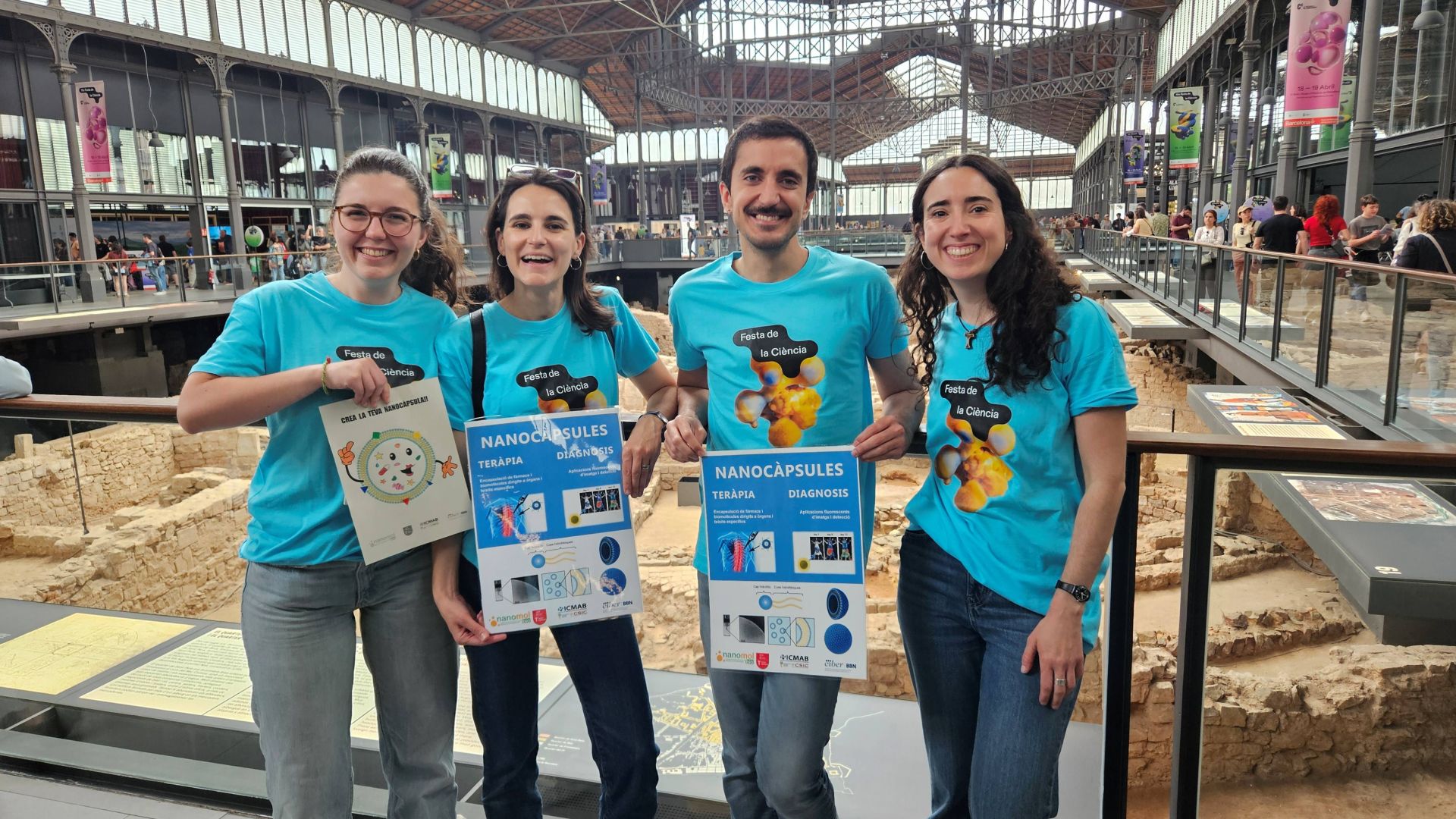
Over the weekend of April 18 and 19, the 19th Science Festival was held, with a focus on architecture, while also including outreach activities showcasing research carried out across Catalonia. The Science Festival is a great opportunity to enjoy science, nurture curiosity, and stay up to date with research in the region. On this occasion, with more than 120 participating institutions, it brought together 22,000 people in an atmosphere of discovery, hands-on experiences, and connections between science and society.
“Spherifications: From the Laboratory to the Plate”
With a suggestive title, researchers from the Nanomol-bio group at ICMAB organized an activity on nanocapsules: what they are, their characteristics, and their main applications. They held three sessions, all of which had full attendance. The activity was addressed at children of all ages, with different formats to suit all interests.
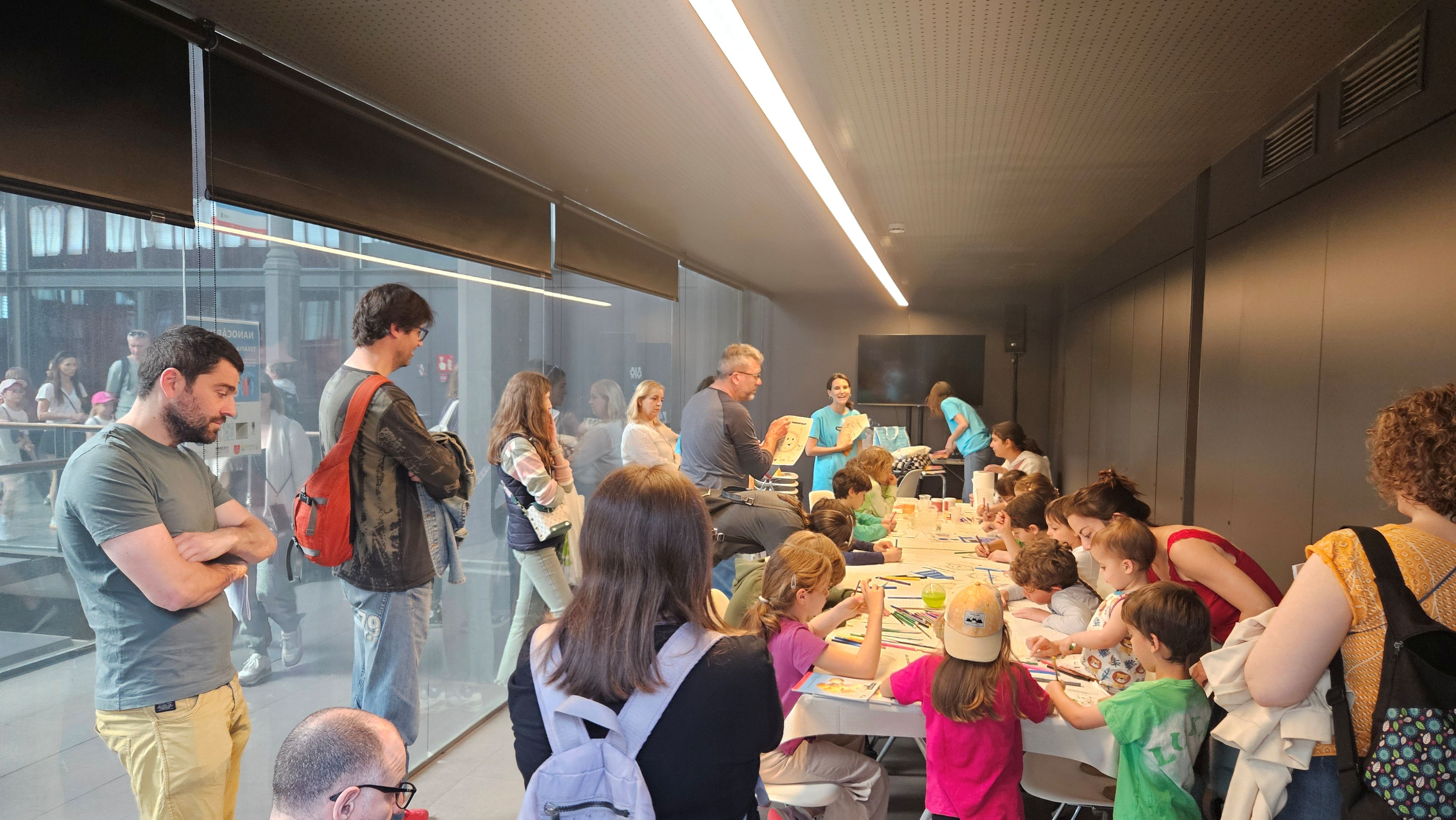
Judit Morlà presenting the activity to the first group
First, there was an introduction to nanomaterials and fluorescence, along with a demonstration of how nanocapsules work. Secondly, participants experimented with spherification processes using sodium alginate, calcium chloride, and juices of all kinds. Finally, they learned about the parts and functionalization of various nanovesicles by painting different models.
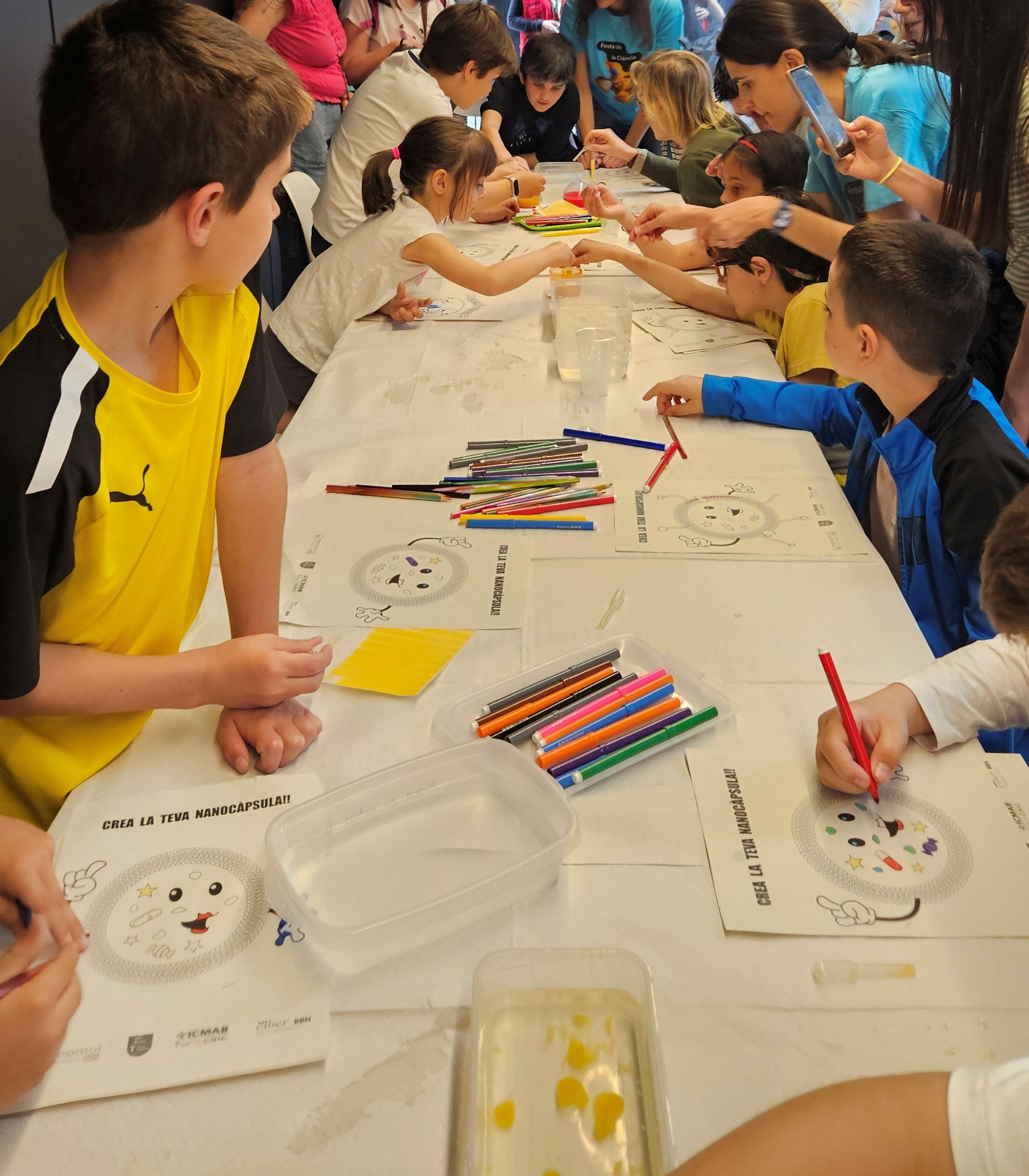
Table with drawings and the spherification set-up
Outreach in the Nanomol-bio Group
The Nanomol-bio group has always been very active with outreach activities, with a wide range of initiatives aimed at diverse audiences: from the youngest members of the household to curious people of all ages, through talks and workshops both at ICMAB and outside.
After the activity at Festa de la Ciència, they reflect on the challenges of communicating their research. The nanoscale is a concept difficult to explain, especially to younger audiences. Over time, they have developed strategies to translate the nanoscale into the macroscale: metaphors and everyday examples are often effective tools. Talking about applications also helps people feel that the topic is more relatable.
Guillem Vargas highlights the importance of being aware of the audience you are addressing in each activity: "One of the most important things I have learned from doing outreach is the need to adapt the language to the person or people you are giving workshops or talks to. You cannot explain the same thing, or use the same words, with young children, families, or people more familiar with the subject. Along the same lines, Núria Pujol emphasizes the importance of using concepts that the audience can understand: “When doing outreach, it is not so important to show how much you know about a topic, but rather that the audience can understand and enjoy it.” In her case, her interest in outreach is combined with her experience in the leisure and education sector, and although she began with initiatives such as Pint of Science, she now leans more toward activities with children.
In any case, outreach is not a one-way activity; much is also received from attendees. Judit Morlà highlights children in particular, noting their creativity and imagination, with truly surprising ideas.
Esperanza Medina (NanoCIM) points out the importance of explaining the interdisciplinary component needed to tackle challenges in biomedicine: “Biologists, chemists, nanotechnologists… we all work as a team and are all essential. Interdisciplinary work is becoming increasingly important across more and more fields.”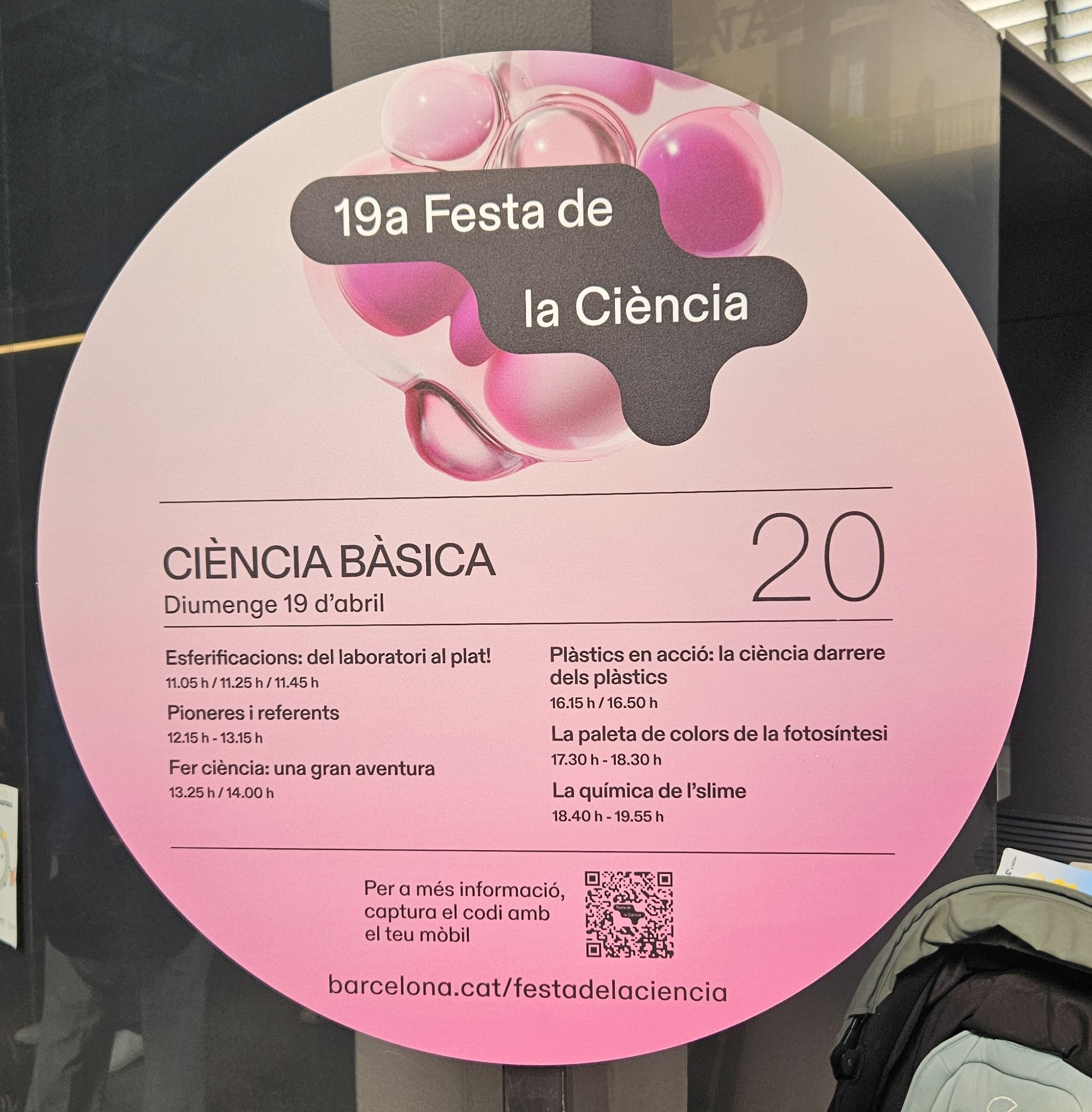
Spot 20: Basic Science programme on Sunday 19th
The outreach they carry out—and will continue to carry out while incorporating lessons learned—is an important way to go one step further in their research. Above all, they emphasize the importance of encouraging scientific vocations and making new materials that will soon reach society less unfamiliar.
More information:
Nanoencapsulation with the Nanomol-bio group at 'Festa de la Ciència' 2026
Festa de la Ciència webpage (Ajuntament de Barcelona, 2026)
