


A new paper has been published in Solar RRL:
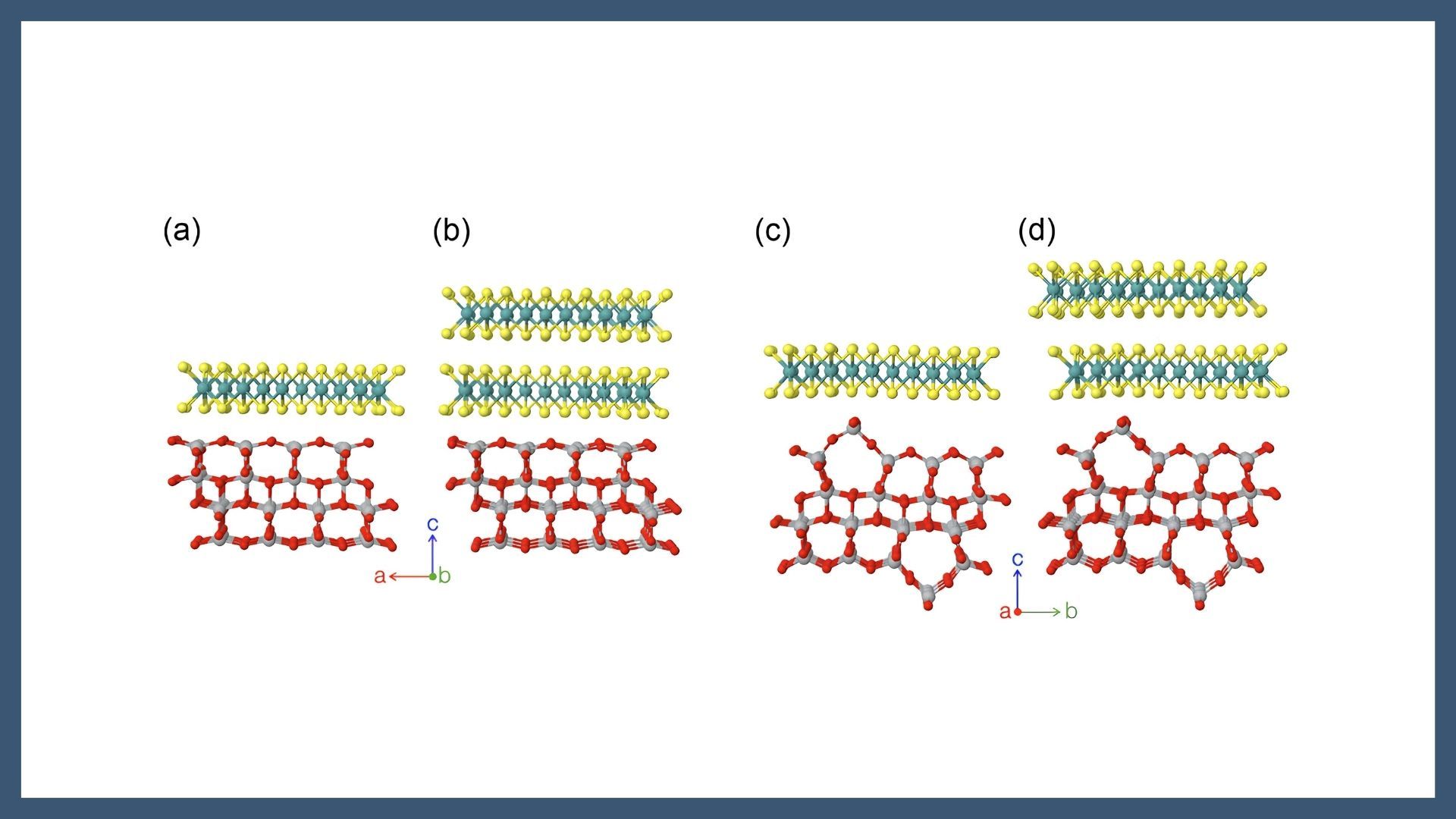
Anatase TiO2 stands out for its exceptional chemical stability, nontoxicity, and robust photocatalytic capabilities; however, its intrinsically wide bandgap severely restricts its activity to the ultraviolet spectrum, limiting practical efficiency under solar illumination. To circumvent this bottleneck, the strategic integration of TiO2 with transition metal dichalcogenides (TMDs), such as MoS2, has proven highly promising, harnessing interfacial charge transfer dynamics, Schottky barrier formation, and bandgap renormalization to extend light absorption into the visible range while suppressing charge carrier recombination. Here, we perform a systematic ab initio investigation of the anatase TiO2 (001) surface interfaced with MoS2, with particular emphasis on elucidating how distinct surface terminations govern structural relaxation, interfacial bonding, and the electronic properties of the TiO2/MoS2 Van der Waals heterostructure. We compare the ideal bulk-terminated (1 × 1) surface with the experimentally stable reconstructed (1 × 4)-ADM surface, highlighting their key similarities and differences and clarifying the atomistic origins of the resulting behavior. Both systems maintain a type-II alignment, reducing the bandgap relative to bulk TiO2 with a redshifted absorption. The unreconstructed (1 × 1) surface is ideal for MoS2 interfacing, optimally meeting Z-scheme requirements.
M4NRG Clean Energy
Surface Termination Unlocks Photocatalytic Potential: Reshaping Structure and Electronics in Ultrathin MoS2/TiO2 Heterojunctions
Borghesi, Costanza; Loletti, Marta; Cantalini, Carlo; Rurali, Riccardo; Giorgi, Giacomo
DOI: 10.1002/solr.70483

