



A new paper has been published in the journal Science Advances:
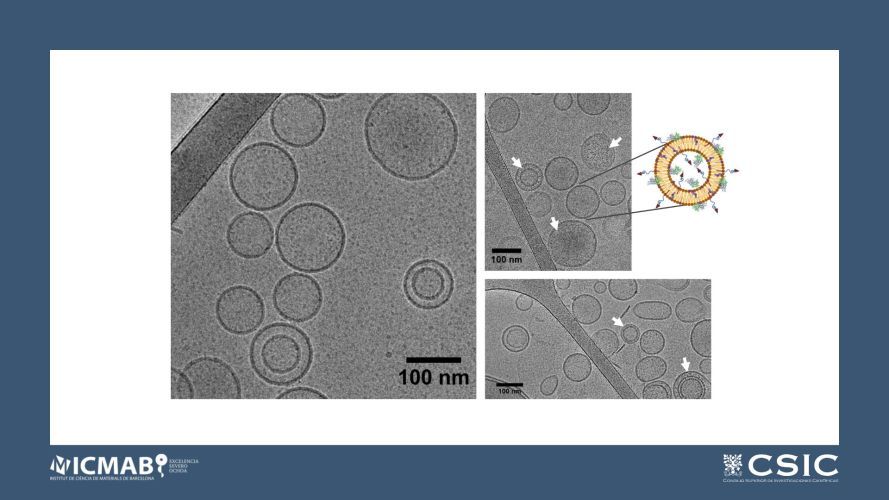
The central nervous system represents a major target tissue for therapeutic approach of numerous lysosomal storage disorders. Fabry disease arises from the lack or dysfunction of the lysosomal alpha-galactosidase A (GLA) enzyme, resulting in substrate accumulation and multisystemic clinical manifestations. Current enzyme replacement therapies (ERTs) face limited effectiveness due to poor enzyme biodistribution in target tissues and inability to reach the brain. We present an innovative drug delivery strategy centered on a peptide-targeted nanoliposomal formulation, designated as nanoGLA, engineered to selectively deliver a recombinant human GLA (rhGLA) to target tissues. In a Fabry mouse model, nanoGLA demonstrated improved efficacy, inducing a notable reduction in Gb3 deposits in contrast to non-nanoformulated GLA, even in the brain, highlighting the potential of the nanoGLA to address both systemic and cerebrovascular manifestations of Fabry disease. The EMA has granted the Orphan Drug Designation to this product, underscoring the potential clinical superiority of nanoGLA over authorized ERTs and encouraging to advance it toward clinical translation.
M4HTH Smart Nanomedicine
Targeted nanoliposomes to improve enzyme replacement therapy of Fabry disease
Judit Tomsen Melero, Marc Moltó Abad, Josep Merlo-Mas , Zamira V. Díaz-Riascos , Edgar Cristóbal-Lecina , Andreu Soldevila, Thomas Altendorfer-Kroath, Dganit Danino, Inbal Ionita, Jan Skov Pedersen, Lyndsey Snelling, Hazel Clay, Aida Carreño, José L. Corchero, Daniel Pulido, Josefina Casas, Jaume Veciana, Simó Schwartz Jr., Santi Sala, Albert Font, Thomas Birngruber, Miriam Royo, Alba Córdoba, Nora Ventosa, Ibane Abasolo, and Elisabet González-Mira
Science Advances, Vol 10, Issue 50

