

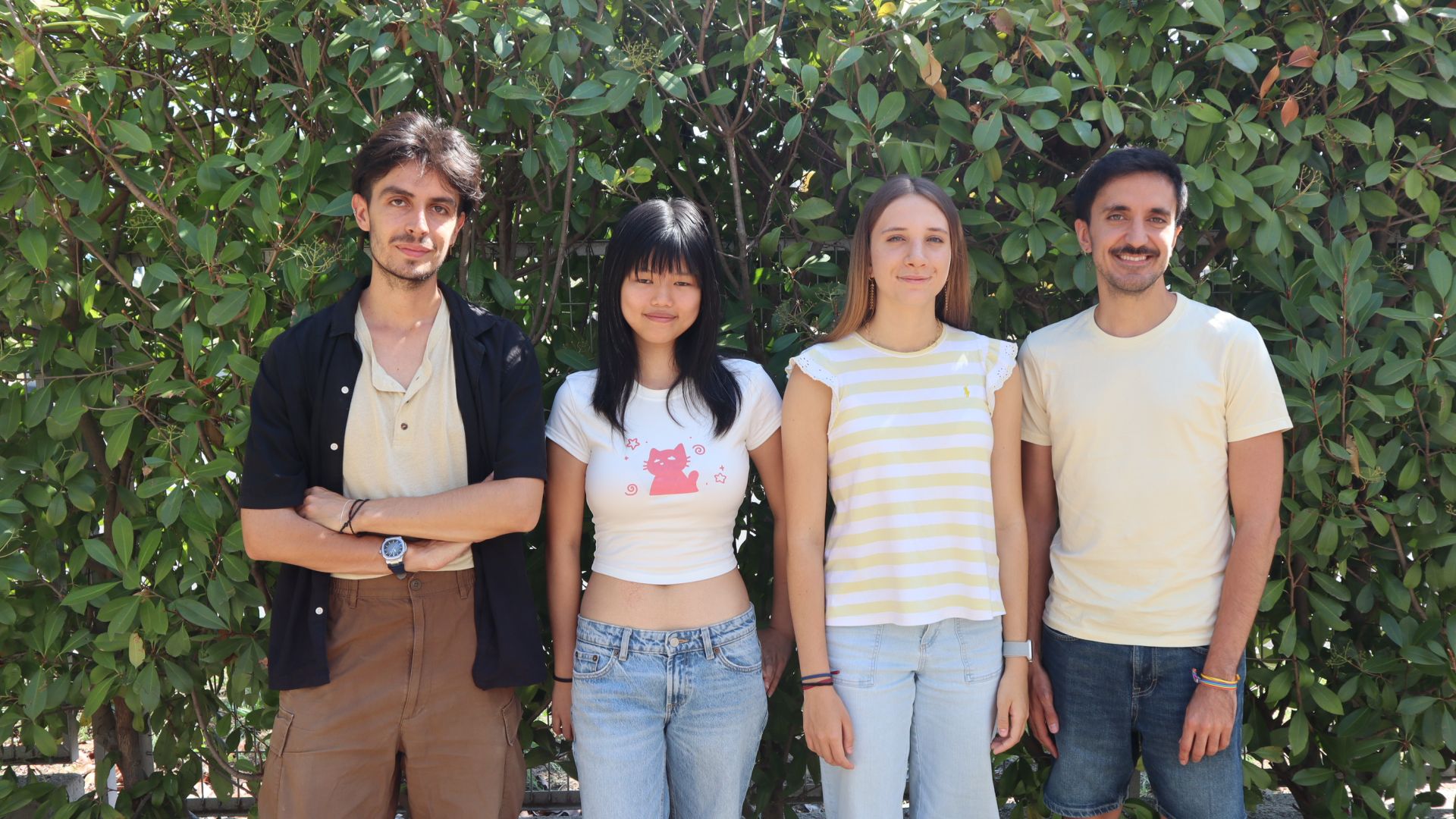
For yet another year, ICMAB participated in the national research stays of the Joves i Ciència programme. On this occasion, Sofia Luo and Maria Sánchez joined the NN and Nanomol-bio groups, respectively. Sofia worked on the project Development of microneedles based on bacterial cellulose for biomedical applications under the supervision of Guillem Wetherell. Maria Sánchez was supervised by Guillem Vargas in the project Nanovesicle preparation for biomedical applications.
The programme is a three-year experience in which talented students are selected and guided through an introduction to the world of scientific research. During the first year, they spend two weeks in the Pyrenees, where they are introduced to various research topics. In the second year, they are hosted in Catalan research centres for a month, except for two students who are awarded a research stay at MIT. This was the case for Maria Sánchez, who then joined ICMAB in her third year. In the third year, the remaining students carry out research stays in international research centres.
The Joves i Ciència programme, organised by the Fundació Catalunya La Pedrera, aims to guide talented students with an interest in science into the research world. Its objectives are similar to those of the Bojos per la Física programme, in which ICMAB also participates.
A month in the programme at ICMAB
Sofia Luo comes from Mollet del Vallès and is a student at Sant Gervasi high-school, where she first heard about the Joves i Ciència programme during a talk. One sentence caught her attention: “If you like science, don’t hesitate and give it a try”. She submitted her CV and motivation letter and successfully completed the selection process.
When asked about her interest in science, she explains she explains that it began with her fascination for animals. “When I was younger I was passionate about animals”, Sofia says. “That interest evolved into wanting to understanding people and their well-being, from biomedicine to renewable energies, through the perspective of science.”
She chose the project Development of microneedles based on bacterial cellulose for biomedical applications, supervised by Guillem Wetherell, for an unexpected reason. She had once heard Kim Kardashian mention microneedles, so the NN topic caught her attention. Looking back on her experience, she highlights the opportunity to work in a professional laboratory with equipment she had never seen in school. Also, she appreciated seeing how scientists work: the same research topic, the same laboratory, but many different approaches.
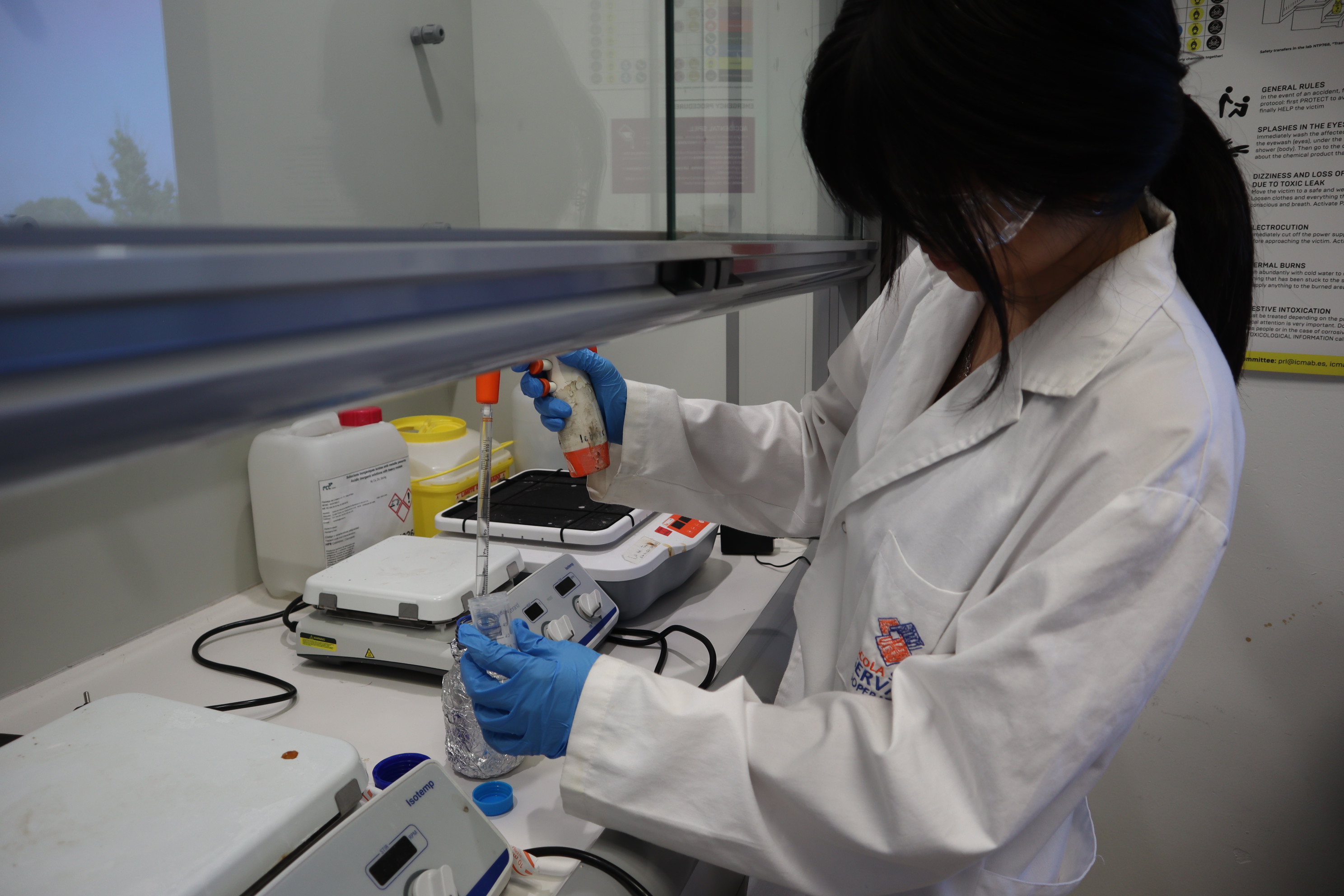
Sofia Luo working in the laboratory fume hood
After working on an inorganic chemistry project during the first year of Joves i Ciència, she moved towards a biomedical project for her second-year research stay. At this stage, she feels she would like to pursue an academic career, combining it with education, as she enjoys explaining science. Among all the questions raised by these different experiences, one thing remains clear: she really enjoys chemistry. “I love how chemistry can be understood and approached from so many different angles. To me, that’s what makes research topics so interesting.”
The day-to-day life of a student in a research group
During her stay with the NN group, Sofia worked with the bacterium Komagateibacter xylinus, specifically on the transition from phase P4 to P5. Her tasks ranged from preparing culture media to fabricating the PDMS mould used to grow the bacterial cellulose. For the final application, a sugar bath was also required to obtain a more robust material.
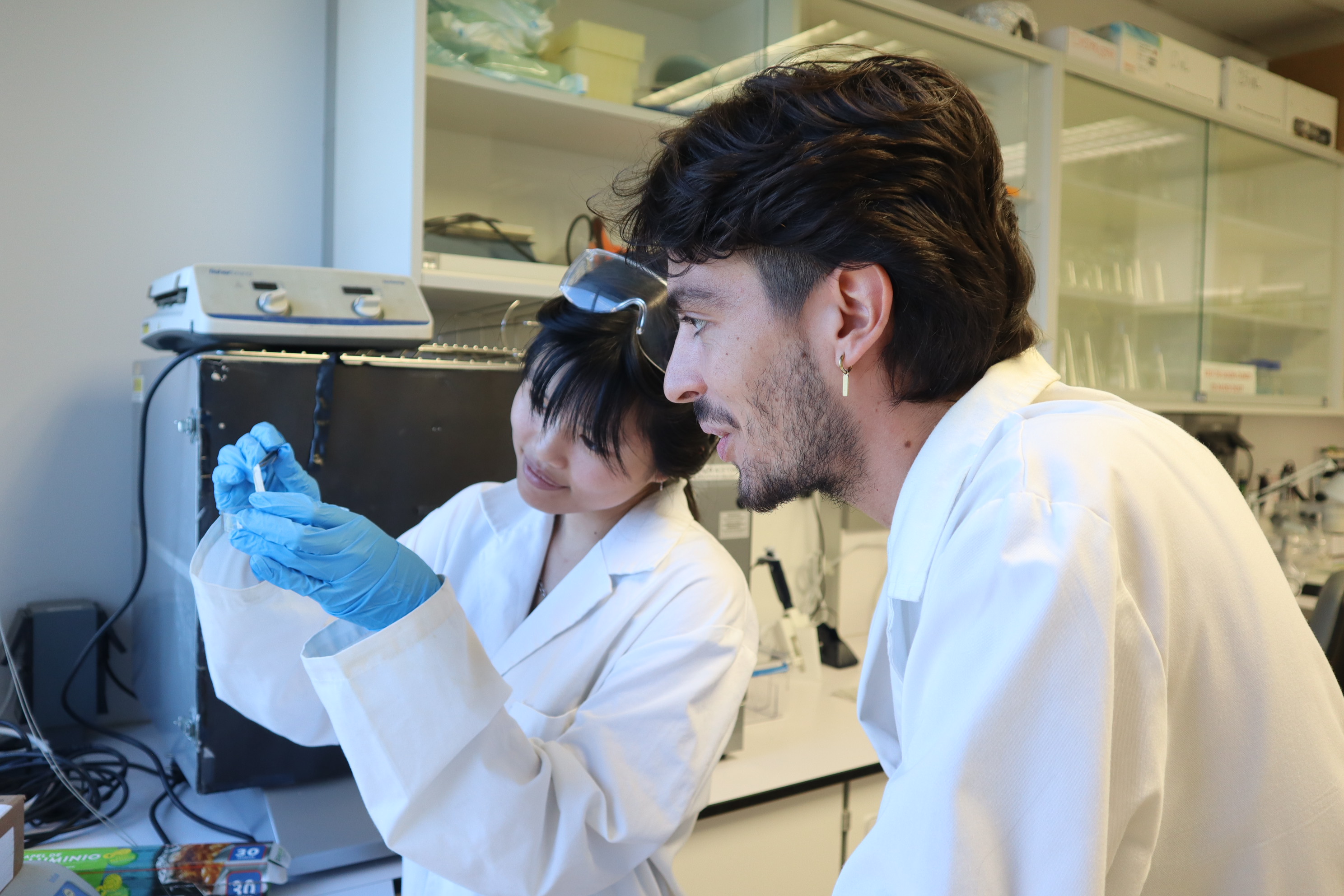
Sofia Luo and Guillem Wetherell with a sample of bacterial cellulose
The microneedles are intended to deliver drugs into the superficial layers of skin, without reaching either blood vessels or nerve endings. This makes drug delivery easier and less painful. In addition, bacterial cellulose is a biodegradable organic material, making it an attractive option for biomedical applications.
Besides her laboratory work, Sofia attended a PhD thesis defence, took part in some activities organised by the Argó programme, visited the SEM and the UAB CryoTEM facilities, attended NN group meetings and gathered some bibliography for her Baccalaureate Research Project (Treball de Recerca).
Wanna host a Joves i Ciència student?
If you would like to offer a research experience to a student like Sofia, contact
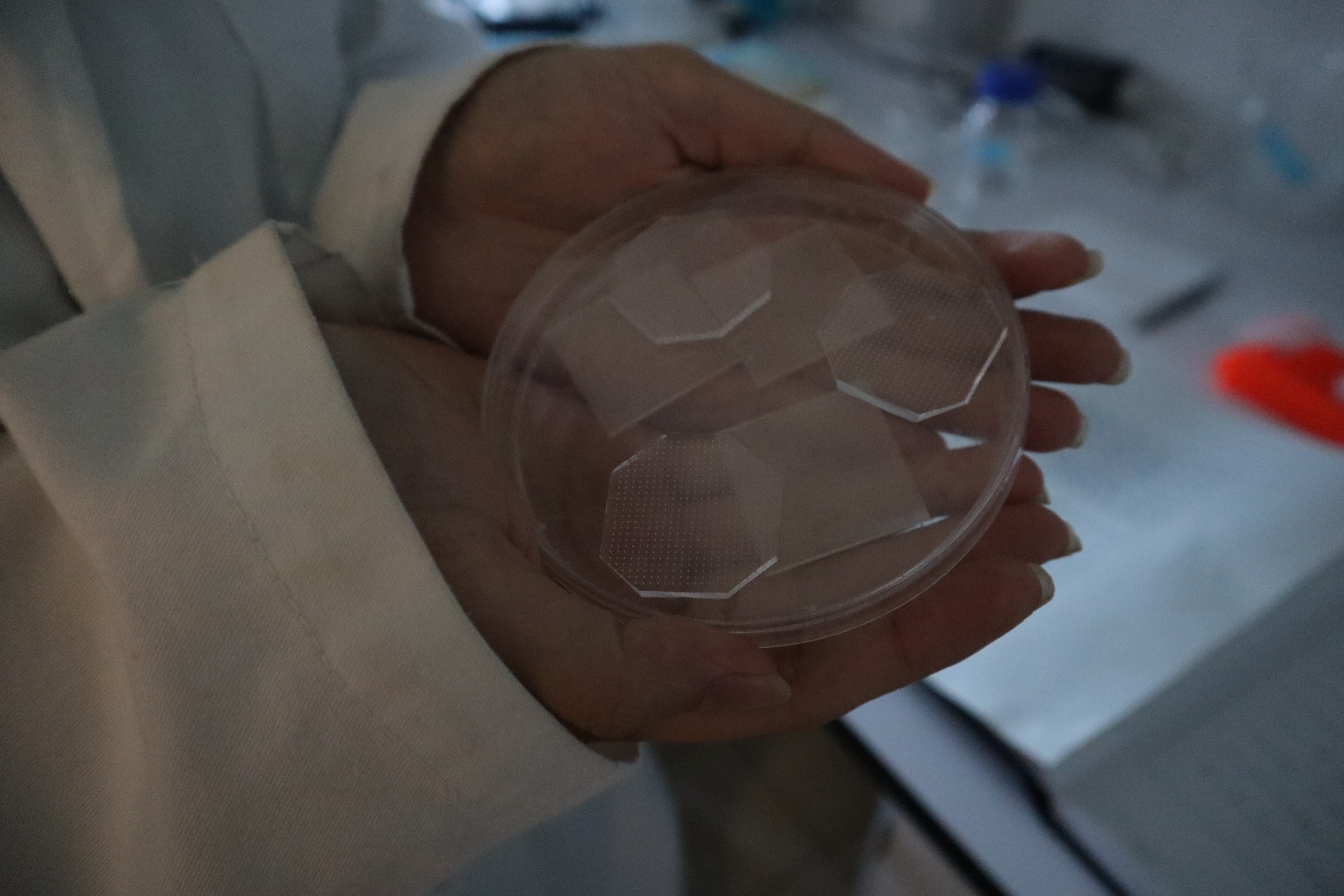
PDMS moulds for bacterial cellulose
More information:
The groups Solid State Chemistry, eMolMat and Nanomol-bio host the 4 Joves i Ciència students in 2025 (ICMAB, 2025)
Two students engaged in cutting-edge research projects at ICMAB through the "Joves i Ciència" Programme (ICMAB, 2023)
July is the time for the "Joves i Ciència" internships at ICMAB (ICMAB, 2022)
